A gas wall heater remains a fast, cost-effective option to heat a living area. And yes, you can legally install or replace one today. While market options have shifted, compliant units are available for homes and rentals.
Here, we break down the installation costs, repair warning signs, and how a licensed gas fitter keeps your setup safe and certified.
A gas wall heater is a self-contained heating unit mounted on your wall, connected to natural gas or LPG.
Unlike central heating, it directly heats the room it’s in without ducts, eliminating conduction heat loss. It’s an efficient way to warm living areas and apartments.
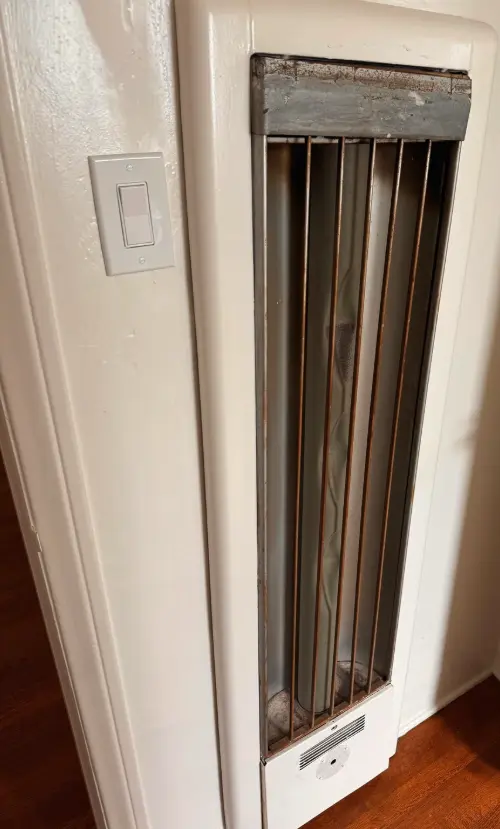
Image: Reddit @baker-boot-8
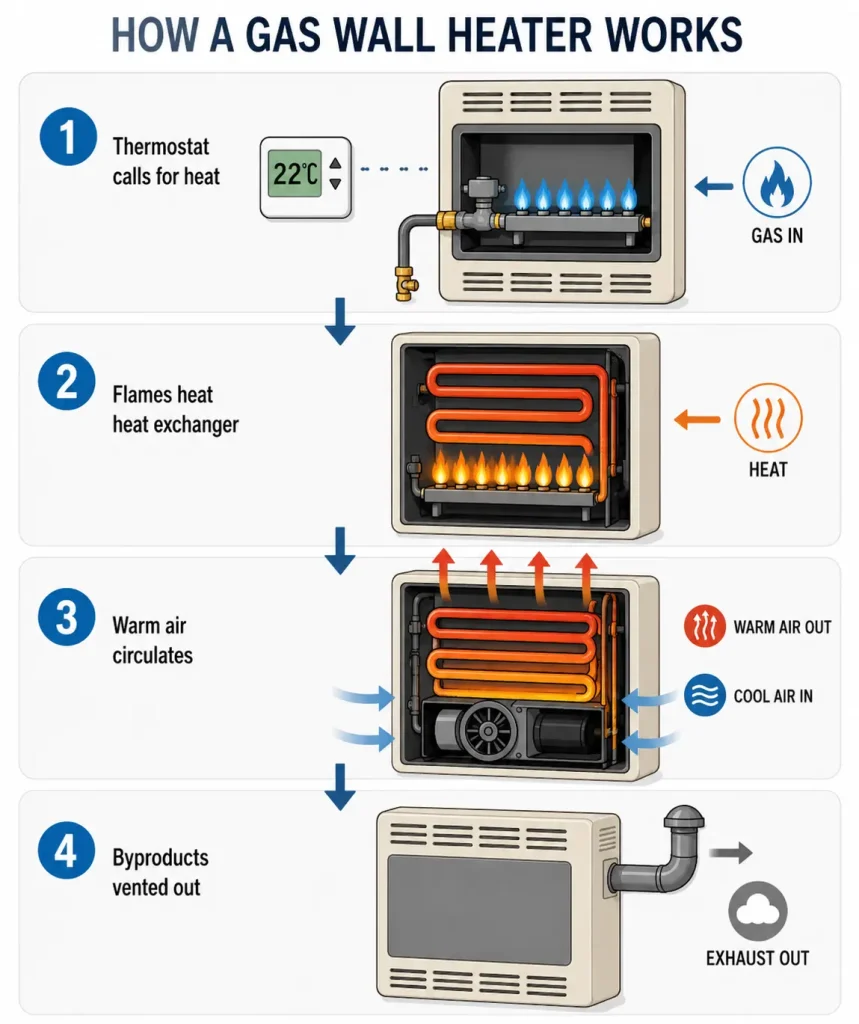
And how does it work? Gas wall heaters burn fuel and transfer heat to warm a space:
You can read our guide on how gas heaters work to understand more about the basic principle of gas heating.
While the basic process is similar, gas wall heaters use one of three combustion designs:
Yes, but “available” doesn’t mean every old wall gas heater has a direct replacement.
Regulatory bans under AS/NZS 5263.1.3 target open-flued heaters without automatic safety shut-offs. As a result, manufacturers have retired many traditional natural-draught units like the older Braemar Ecostar.
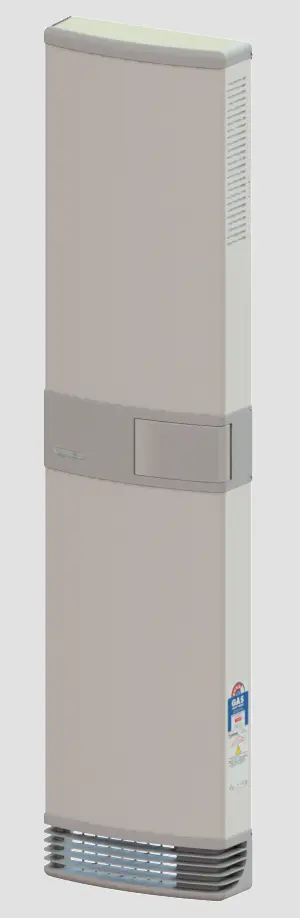
Image: seeleyinternational.com
For internal-wall flue cavities, the main compliant option is a room-sealed heater like the Rinnai 561FT Energysaver. Because it needs an approved coaxial flue system, you can’t reuse an old natural-draught flue.
On top of that, unflued portable or wall-mounted heaters using a gas bayonet fitting aren’t viable replacements.
Victorian rules ban new indoor unflued installations, with narrow exceptions for emergency LPG replacements in strictly ventilated spaces.
So, before buying, have a licensed gasfitter check your wall cavity, flue route, clearances, and gas pipe diameter.
There is no reliable single installed price. Expect to pay $1,000 to $3,500 to supply and install a gas wall heater in Melbourne, based on flue complexity, wall modifications, and pipework.
Basic panel changeovers sit at the low end, but swapping old open-flued furnaces for modern sealed units costs more.
Here’s a baseline guide for Melbourne installations:
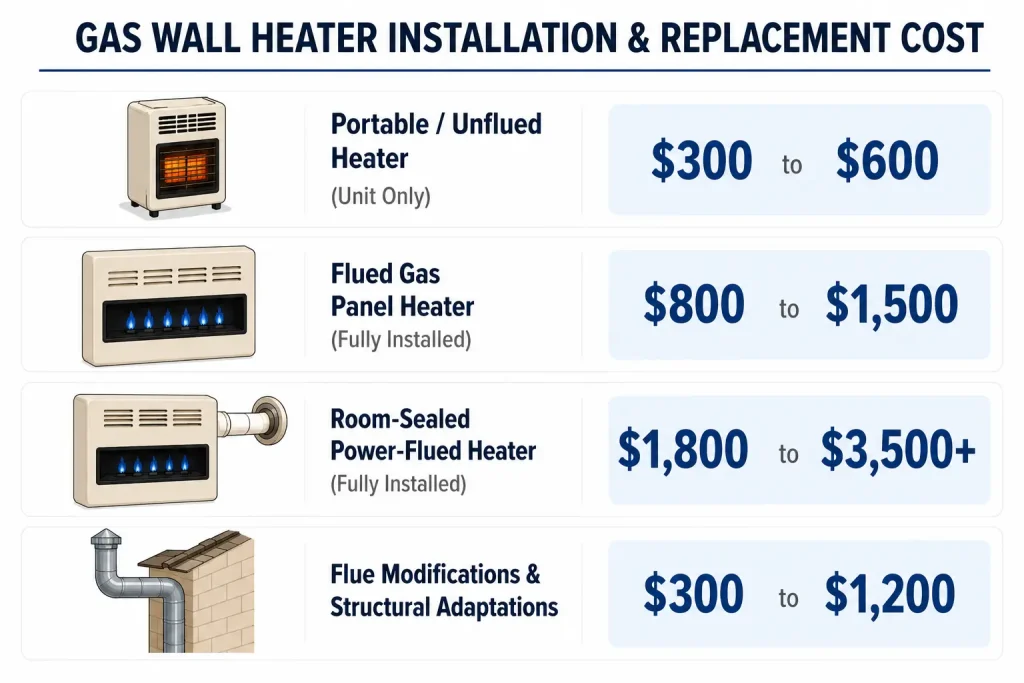
A straight replacement on an accessible external wall takes 2–4 hours. Replacing outdated natural-draught open-flued furnaces like discontinued Braemar Ecostar or Vulcan models costs more.
Modern room-sealed heaters need dedicated coaxial flues that meet AS/NZS 5601.1 clearances. And oversized recessed-furnace openings might need custom infill plates or boxing for a compliant finish.
Melbourne Gas Plumber’s on-site assessments start by checking appliance supply, labour, flue adaptations, and decommissioning.
Your situation will shape both the process and the quote:
First, check the existing flue and gas point. Can the new unit reuse them? That’s the biggest cost factor.
If the old model’s been discontinued, the gas fitter matches the closest option. Room size, gas type, flue configuration—all matter.
Modern console heaters run smaller than the built-in wall furnaces they replace. This leaves a gap in the wall that needs a custom infill trim kit or plasterboard framing.
Also, fan-forced heaters need a nearby 240V power point for the convection fan and electronic ignition. Older mechanical furnaces didn’t.
If you replace the old unit, a licensed Type A gasfitter will check that the existing gas line delivers the right operating pressure and test for leaks.
You need to confirm whether your home is already connected to natural gas, or whether LPG is the practical fallback.
From there, the choice between a flued and unflued unit comes down to the room and its ventilation. An unflued heater is out of the question for a bedroom or bathroom, whatever your budget.
And if you must run gas to a new spot before the heater goes in, that’s a new gas installation job rather than a simple replacement.
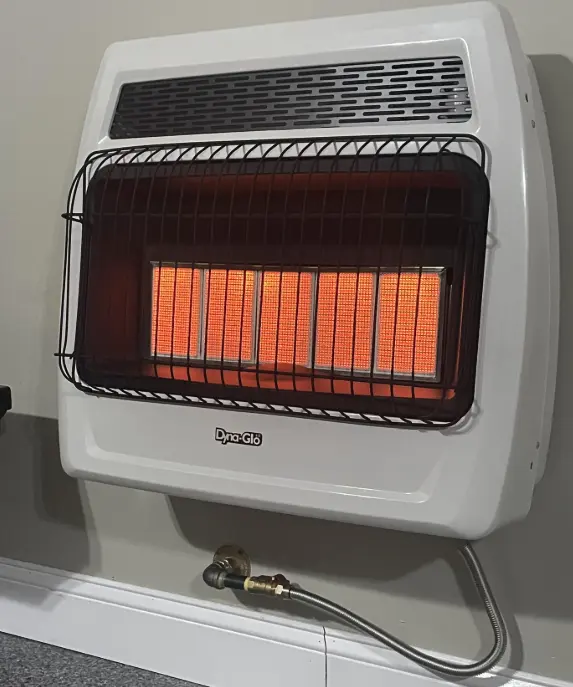
Image: Reddit @Low_Connection
Putting a gas wall heater into a room with no existing point means you’ll design the gas line, electrical supply, and flue route from scratch.
Your licensed gasfitter must check that roof and wall flue terminals meet clearance distances from windows, doors, and property boundaries under AS/NZS 5601.1.
They must also verify the heater’s megajoule demand. If it drops gas pressure to your hot-water unit or cooktop, that’s a problem.
For some Melbourne homes, a gas wall heater still makes sense because of:
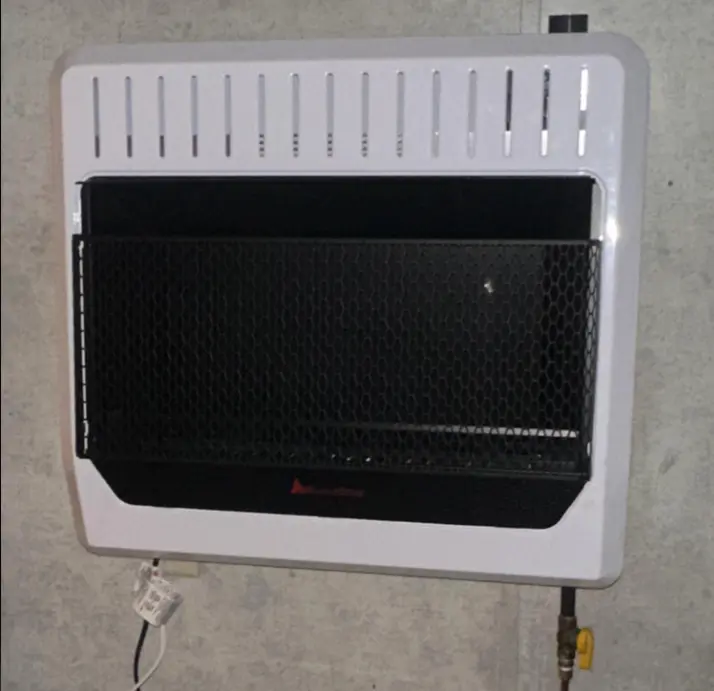
Image: Reddit @Formal_Foundation
But, the limitations matter, too:
So, what replaces an old gas wall heater? Reverse-cycle split systems are your best bet. You can get a Victorian Energy Upgrades (VEU) discount, but you might face extra costs for circuit upgrades and wall repairs.
Still, a flued gas wall heater is a cheap, reliable fix for fast heat in a single living area. And for some, that’s enough.
Installing or connecting a gas wall heater isn’t a DIY job. In Victoria, only a licensed gasfitter can do it, and the work must comply with AS/NZS 5601.1:2022 and manufacturer instructions.
When a gas appliance is installed, relocated, replaced, or converted, the gasfitter must issue a Compliance Certificate. Keep it with your property records. You’ll need it for insurance, maintenance, or a future sale.
Routine servicing doesn’t always need that certificate, but get a service record anyway. Energy Safe Victoria recommends servicing gas heaters at least every two years.
A proper service goes beyond checking it starts. It covers the appliance, flue, ventilation, combustion, and the risk of carbon monoxide spillage.
Victorian rental properties have a separate rule: gas safety checks every two years.
For agreements made after 29 March 2021, a licensed gasfitter endorsed for Type A appliances must do it. From 13 October 2026, this applies to all rental agreements.
Rental providers must keep records and give renters the latest gas safety check within seven days of a written request.
So, before booking installation, replacement, or servicing, check the gasfitter’s licence or registration. And verify work classes through the Building and Plumbing Commission.
These warning signs mean your gas wall heater needs professional attention:
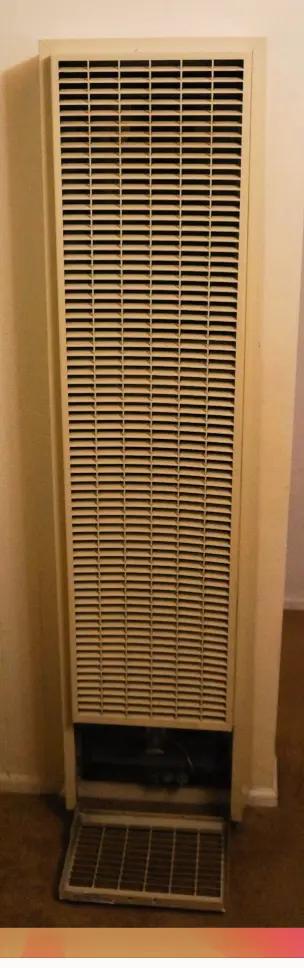
Image: Reddit @Tyrannosaurus-WRX
Keep in mind age alone doesn’t mean replacement is needed. A licensed gasfitter can weigh condition, repair history, and parts availability, and tell you if repairing still makes sense or replacement is the better call.
Only a registered or licensed gasfitter can install, replace, or connect a domestic gas heater in Victoria. Servicing a Type A appliance also needs the right specialised class.
A visit starts with the appliance, the room, the gas supply, ventilation, and the flue.
For replacement work, the gasfitter decommissions the old unit, installs and commissions the approved system, then hands over the required paperwork. It’s rarely just a quick “replacement.”
Here are questions Melbourne homeowners asked about gas wall heaters:
Yes, you can still install a gas wall heater. Victoria restricts new mains-gas connections for some builds, but replacing an appliance in a connected home is allowed if you meet the requirements.
Braemar may have stopped making traditional open-flued wall furnaces, but compliant room-sealed, power-flued options are still available. The Rinnai Energy Saver range is one example.
Installation costs between $300 and $2,000.
A straightforward replacement costs less, but prices rise if you’ll need a new flue penetration, upgraded gas pipework, or a 240V power outlet.
Have a licensed Type A appliance gasfitter service the heater every two years.
A proper service clears burner lint, checks manifold and injector pressure, tests the flame-failure thermocouple, and inspects the heat exchanger.
For heating one room, a gas wall heater is cheaper to install and run than a ducted system, though it won’t heat the whole house.
The right choice comes down to the area you need to heat and how many rooms you want warm.
Yes. Under the 1997 Act and 2021 Regulations, rental properties need gas safety checks every two years, and landlords must give renters the records.
From 13 October 2026, this requirement will apply to all rental agreements, regardless of when they began.
Gas wall heaters remain a sound, cost-effective choice for Melbourne homes, even with shifting market options driven by all-electric pushes across Victoria.
Thinking about installing one or replacing an aging unit? Getting the right fit and flue ventilation matters. Under Victorian law, a licensed gasfitter must complete gasfitting work.
Whether you need a direct replacement, or a new installation, Melbourne Gas Plumber can help. Call before 10:30am for same-day gasfitting service across Melbourne with an upfront quote before work begins.

Every week, we share practical insights based on the combined knowledge and real-world experience of our team. Our articles cover gas fitting, gas safety, appliance installation, hot water systems, maintenance and everyday plumbing issues, so you can make well-informed decisions about your gas plumbing needs.


Fill the form below and we’ll get back ASAP!

MGP! Thank you for help, honest pricing and high quality work. Thank you to Joe for pricing and the boys involved for replacing my hot water tank and fixing my gas leak for a reasonable price. 5 star response, 5 star service and 5 star price.
Joe was great. Very professional and quick. Gas hot water heater needed replacing, he was honest and upfront about what our options were. System was sourced and replaced within a couple of hours.
Fantastic service very responsive Joe is highly recommended and works very clean and neat..... good job well done....very happy... will use again and again

At Melbourne Gas Plumber, we're here to handle all your gas plumbing needs throughout Melbourne. With over 40 years of experience, we bring extensive local knowledge and expertise to every job.
QUICK LINKS
OPENING HOURS
Open 24/7