You want that instant flame control of a gas stove, but you also need that clean, flat look of an electric one. The problem is, you have to choose one.
Gas vs. electric stoves is a classic dilemma for Melbourne homeowners replacing kitchen appliances. And there is no single “best” option. The right choice depends on your cooking style, kitchen layout, and budget.
This guide makes the differences clear before you commit to a new gas installation or an electric upgrade. Let’s dive in!
Before we get into the details, here’s a quick, easy overview to help you compare gas vs. electric stoves on what matters most:
| Factor | Gas Stove | Electric Stove |
|---|---|---|
| Heat Source | Open flame from natural gas or LPG | Electric heating elements or magnetic induction |
| Heat Response | Instant flame adjustment; precise control | Induction is faster; traditional ceramic remains slower |
| Cooking Surface | Cast-iron grates over burners | Flat ceramic glass or coil elements |
| Installation Requirements | Licensed gasfitter required under AS/NZS 5601.1:2022 | 240V/32A circuit and licensed electrician |
| Upfront Cost | $450–$2,800+ | $400–$3,500 |
| Installation Cost | $350–$1,500+ (gas line work, compliance cert) | $500–$950 (for new 32A dedicated circuits) |
| Running Cost | Around $180/year usage | Around $150/year (often $0 with rooftop solar) |
| Cleaning | Removable grates require regular scrubbing; gaps trap grease | Flat surface, quick wipe; minimal parts to clean |
| Safety Considerations | Gas leaks, combustion gases, open flame | Hot surface burns, electrical faults |
Once the differences are clear, the real test is how the stove performs in everyday tasks:
Gas stoves give you a highly responsive flame and instant control. That matters more than you realise until you cook with one.
Good heat control is the difference between a perfectly seared steak and a grey, overcooked slab, or crisp vegetables and a burnt mess.
Think about flash-frying Thai basil beef in a wok. You can just turn the flame to high in under a second, get that wok hei char, then instantly lower to a gentle simmer.
You can’t do that as effectively on traditional electric stoves. It’ll make your beef tough and steam your vegetables instead of searing them. And that’s the last thing you want.
Modern electric stoves give you steady, even heat. For many home cooks, that reliability matters more than instant response.
You need that for sauces, custards, slow braises, and risottos. Even a 10 °C shift can ruin a delicate hollandaise, break a béchamel, or make your risotto cook unevenly.
Now, think about a smooth crème brûlée. On a good electric stove, use a low setting like 1.5 or 2 to keep the heat steady. This thickens the custard perfectly without cooking the eggs too fast.
Just remember that traditional electric stoves have a slight delay when you turn the dial, which takes some getting used to if you are used to cooking with gas.
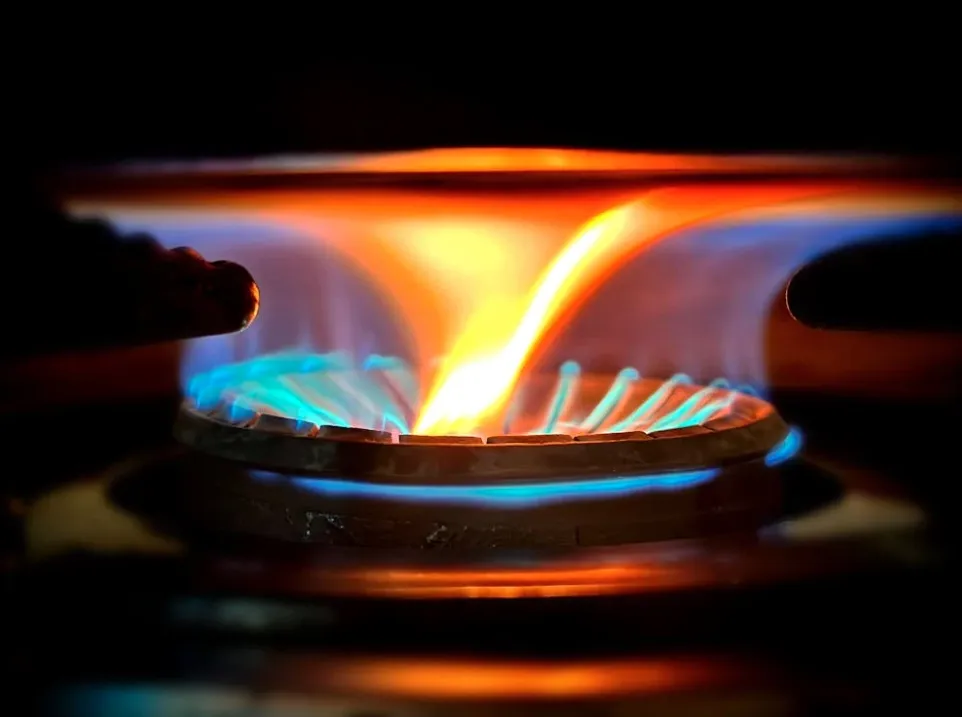
Image: Kenny Fotos CR on Pexels
For many homeowners, monthly energy bills matter just as much as cooking performance:
Gas is cheaper per unit of energy, costing about $0.025–$0.035 per MJ. But, gas appliances lack the efficiency of modern electric models.
When you sear a steak, you’re burning gas to heat the air around the pan, not just the pan. Boil a kettle and you’ll see the problem. You use 1.5 MJ (about $0.04–$0.05), but only 55% of that energy reaches the water.
If you cook for 30 to 60 minutes a day frying eggs or baking, you’ll spend between $85 and $140 a year. If you do heavier cooking, like long simmers, that cost jumps to between $160 and $280.
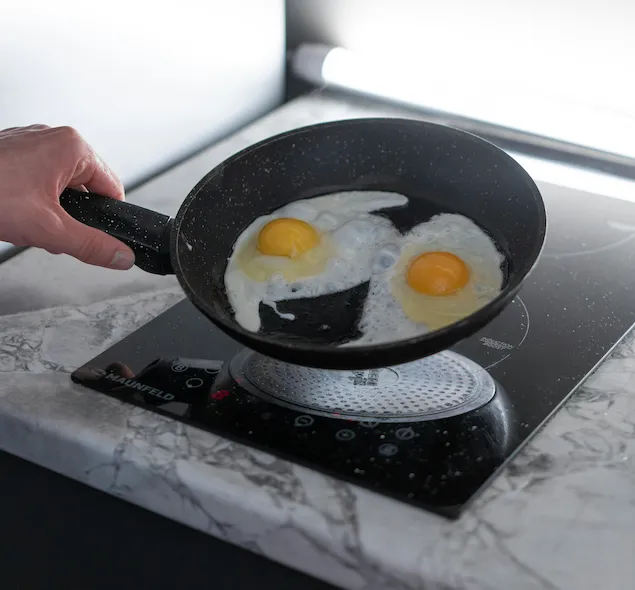
Image: Mikhail Nilov on Pexels
Electricity costs $0.25–$0.35 per kWh, but electric cooktops are highly efficient, transferring 70%–90% of energy directly to the cookware. This efficiency closes the cost gap.
If you cook 5 to 6 nights a week, a modern electric stove costs you around $95 to $150 a year. Yes, that’s already less than what you’d pay for gas.
Boiling a kettle uses just 0.2 kWh, which runs you about $0.05 to $0.08. Cook less often or use lower heat, and your yearly bill could drop to $80 to $120.
Use the Victorian Energy Compare tool to model your situation based on your actual usage and tariff.
You know how much gas and electric stoves cost to run. But what about the price to buy them?
In Melbourne, gas cooktops range from $400 to $4,000. Reliable models like Westinghouse and Bosch cost $600–$1,500, while premium brands like Smeg and Miele range from $2,500–$4,000.
Installation is often the primary cost barrier. Connecting to an existing line costs $300–$1,200. If you lack a gas line, costs rise to $1,200–$5,000 to cover new piping, structural work, and safety inspections.
Just make sure you know who installs gas lines properly for better safety and a solid installation.
Modern electric cooktops cost $600–$5,000, with $800–$1,800 models offering the best value in features.
Including $400–$1,200 for installation, your total cost ranges from $1,000 to $6,200, plus $1,200–$3,200 if you need electrical upgrades.
Switching from a gas stove to an induction cooktop costs $2,000–$8,000. That covers the appliance, electrical work, and professional gas disconnection.
Before choosing a gas or electric stove, understand the key practical installation steps:
You can’t just install a gas stove yourself. It’s illegal under the Gas Safety Act 1997. You must hire a gasfitter registered with the Victorian Building Authority who follows the AS/NZS 5601.1:2022 standard.
Here is what your gasfitter will do for every gas line installation process:
And if your home doesn’t have a gas line yet, they’ll run new copper piping through walls, floors, or ceilings—and let Energy Safe Victoria know for the difficult jobs.
To install an electric or induction stove, you must hire a licensed electrician to make sure the work follows the AS/NZS 3000:2018 Wiring Rules.
Your electrician will set up a dedicated high-power circuit (usually 20–32 A at 240 V), hardwire the stove, and add RCD protection for safety.
They must also install an easy-to-reach power switch within two metres of the stove, keeping it at least 150 mm away from the cooking surface.
Older homes in Melbourne might need a switchboard upgrade or new wiring to handle the power needed for modern induction stoves.
And if you are switching from gas, your electrician will work with a plumber to safely seal off the old gas line.
Do you use a gas stove? Between splattering oil from stir-fries, bubbling pasta sauces, and meat drippings, grease and burnt food get trapped under the grates, inside the burner heads, and around every edge.
This makes cleaning it a long, difficult task. Still, you need to clean them weekly to keep them working well and to prevent fires. Also, you should have a licensed gasfitter check the valves and sensors every two years.
On the other hand, electric stoves have smooth glass tops that are easy to wipe clean with a non-scratch cloth, taking very little effort.
But keep in mind that repairs are expensive. Replacing a cracked glass top or a control board often costs almost as much as a new stove.
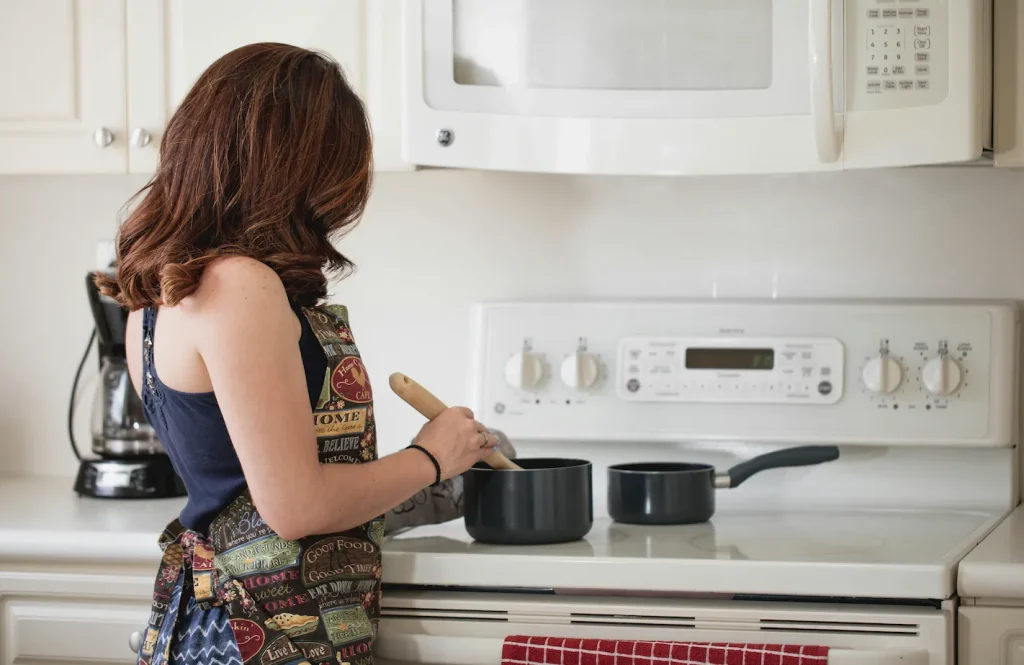
Image: On Shot on Pexels
Both types of stoves are safe if they’re installed and maintained correctly, but they have different risks.
Gas stoves release nitrogen dioxide and carbon monoxide. A Medical Journal of Australia study found that gas stoves are responsible for 12.3% of childhood asthma cases in the country.
Gas stoves also use open flames, which can be dangerous for kids and pets. So, if you choose a gas stove, learn about gas stove safety and pick one with an automatic shut-off safety feature.
Electric and induction stoves don’t burn fuel, so they are safer from gas leaks. Induction cools down quickly, but ceramic cooktops stay hot for a while.
Not to mention that newer electric models feature auto shut-off and residual heat indicators. When professionally installed, they are an excellent, gas-free choice for Melbourne kitchens.
How long does a gas stove last? What you bought today can last 13 to 17 years with good care. So it could still be in your kitchen in 2040.
Why do they last so long? Gas stoves have simple parts. The burners, grates, and igniters are simple. When they break, they’re easy to fix.
You can replace a broken igniter for $150–$300, or spend $100–$200 on a new thermocouple to get five more years of use.
Electric cooktops are more fragile. They last about 13 years, but ceramic models often break in just 7 to 10.
Homeowners often find that a dropped pot or a splash of cold water cracks the glass. This leads to a $400–$1,050 repair or a $1,200+ replacement because the parts are all sealed together.
And what about dual-fuel stoves? These usually last 13 to 15 years. People love them because they bring the best of both worlds. You get the control of a gas flame and the steady heat of an electric oven.
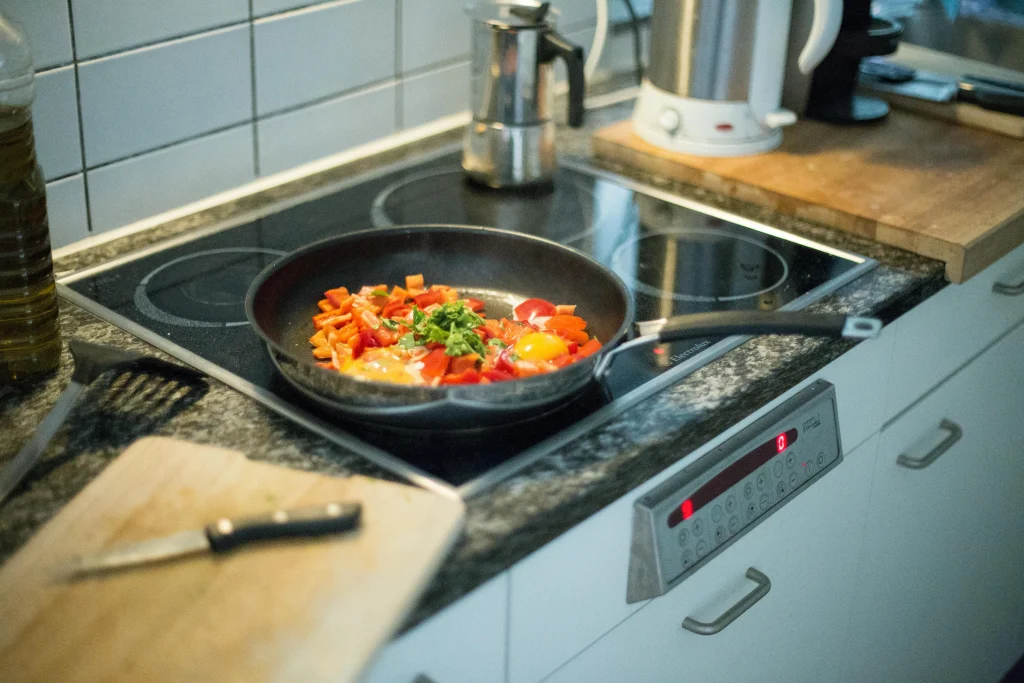
Image: Ela Haney on Pexels
After looking at performance, costs, and safety, here’s how to pick the right stove for your home:
Choose gas if:
Choose electric if:
Choose a dual-fuel stove if:
Choose induction if:
For renters: You’ll need your landlord’s approval before installing any gas connections. If your rental already has gas, a licensed gas fitter can help swap appliances.
These are the answers to common questions Melbourne homeowners have when choosing between gas and electric stoves:
It depends on your setup. While gas is cheaper per unit, the $285–$440 annual supply charge often negates savings if a cooktop is your only gas appliance. If you already use gas for heating or hot water, the cooktop adds little cost.
Even if you know how to install a gas cooktop, you can’t do this yourself. In Victoria, all gas installations must be performed by a licensed gasfitter as per AS/NZS 5601.1:2022. DIY gas work is illegal under the Gas Safety Act 1997.
Yes. External venting is strongly recommended and often required by appliance instructions and AS/NZS 5601.1:2022. For new setups, the minimum space between the cooktop and range hood is 650mm.
Gas stoves typically last 13–17 years, while electric models average 7–13 years. Lifespan depends more on maintenance and component complexity than the stove type itself.
A dual-fuel stove combines a gas cooktop with an electric oven in one appliance. You get responsive flame control for stovetop cooking and consistent dry heat for baking.
So which one, a gas or electric stove? Well, it all depends on your cooking style, kitchen setup, and budget.
If you already have a gas connection, it’s easier to add or upgrade a gas stove. Otherwise, an electric one is usually more cost-effective.
And anyone choosing gas must call a licensed gas fitter for installation. Ready to install or upgrade your gas stove? Contact Melbourne Gas Plumber for trusted, compliant service.

Every week, we share practical insights based on the combined knowledge and real-world experience of our team. Our articles cover gas fitting, gas safety, appliance installation, hot water systems, maintenance and everyday plumbing issues, so you can make well-informed decisions about your gas plumbing needs.


Fill the form below and we’ll get back ASAP!

MGP! Thank you for help, honest pricing and high quality work. Thank you to Joe for pricing and the boys involved for replacing my hot water tank and fixing my gas leak for a reasonable price. 5 star response, 5 star service and 5 star price.
Joe was great. Very professional and quick. Gas hot water heater needed replacing, he was honest and upfront about what our options were. System was sourced and replaced within a couple of hours.
Fantastic service very responsive Joe is highly recommended and works very clean and neat..... good job well done....very happy... will use again and again

At Melbourne Gas Plumber, we're here to handle all your gas plumbing needs throughout Melbourne. With over 40 years of experience, we bring extensive local knowledge and expertise to every job.
QUICK LINKS
OPENING HOURS
Open 24/7