That sulphur smell from your furnace isn’t something to ignore. Knowing if it’s a normal startup odour or a gas leak could save lives.
Causes include pilot light failures and cracked heat exchangers. This guide covers common issues, how to identify urgent problems needing professional gas fitting service, and tips to stay calm and respond safely.
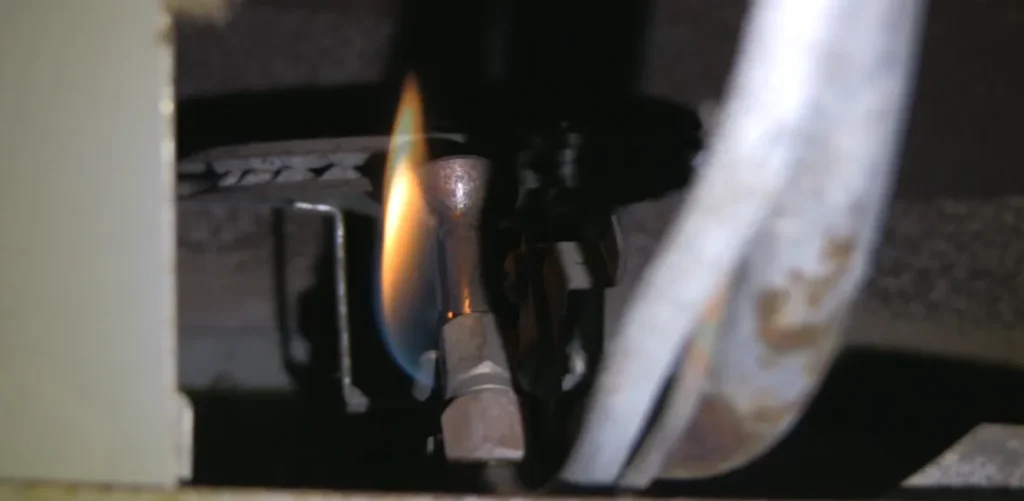
It depends on what you smell. A faint burning dust smell when your gas furnace first starts up is normal. But if your furnace smells like gas or strongly of rotten eggs, it could mean a gas leak.
If the latter happens, you should leave right away and call your gas leak detection service. Don’t ignore that rotten egg smell. It tells you there’s a problem with your gas system.
To help you understand what’s normal, know how your furnace works.
Gas enters through a sealed valve into the burner, ignites, and burns completely. That creates a blue flame that heats the exchanger, while exhaust gases vent outside. Your air passes over the hot exchanger.
The sealed combustion system prevents flames, gas, and exhaust from mixing with your air. In short, your furnace is designed to keep combustion byproducts separate from the air you breathe.
You already know if it’s normal for your furnace to smell like gas, but you might still be wondering, “Why does my furnace smell?” Here are the 7 most common reasons:
This is what we just covered: the least risky, yet most misunderstood cause. Your furnace might not be leaking gas; it’s just burning off residues.
When it’s idle during the heating season, rust, oils, coatings, and dust settle inside. And when you turn it on and it heats up, around 60–80°C, these compounds vaporise and burn off.
It’s normal, but if the furnace smell lasts over a day or two, it might be time for a maintenance check.
Your furnace’s heat exchanger is a sealed metal chamber that transfers heat from combustion gases to your home’s air.
After 15–20 years, it can crack, causing harmful gases like carbon monoxide, nitrogen oxides, water vapour, and mercaptan to leak into your home. That’s why you might smell rotten eggs or sulphur.
The smell warns you, but the real danger is carbon monoxide. Since it is odourless and invisible, the smell poses a serious risk.
The pilot light in your furnace is important. It ignites the main burner when you need heat.
Older models keep the pilot burning constantly, ready to light the fuel. If the pilot flickers or goes out, the main burner won’t turn on reliably.
Gas enters the chamber, but if the flame isn’t steady, some gas escapes unburned. Unburned natural gas escapes, causing that rotten egg smell since it’s not burning but building up.
Your furnace’s gas valve controls the flow of natural gas into the combustion chamber. It gets signals from the control board and opens or closes to give the right amount of fuel so it burns well.
If your gas valve isn’t working right, you’ll notice your furnace smells like gas. Usually, this happens when the valve doesn’t close all the way, so a little gas can leak out even when your furnace is off.
The same thing happens if your valve is only partly closed, you might get incomplete burns and smell gas, too.
Your gas gets to your furnace through copper or steel pipes. These lines stay under pressure, even when the furnace is off.
Over time, moisture or exposure can corrode these pipes. If that happens, your furnace smells like gas. And that’s not just happening when the burner’s on. That indicates gas is leaking into your mechanical space.
Your furnace needs two things: exhaust gases must leave, and fresh air must enter. This simple exchange keeps it running safely and efficiently.
If exhaust gases can’t escape, they build up inside the furnace. This pressure forces combustion byproducts. The smell often grows stronger as the furnace runs.
Incomplete combustion happens when the fuel and air aren’t balanced. This can happen if burner ports are dirty, air inlets are blocked, or carbon builds up inside the burner.
Over time, carbon and sludge build up in the burner, changing its shape and disrupting how the fuel sprays and air flows.
Yes, sometimes your furnace smells like gas. Other times, it smells like a dead animal. What do these different odours usually indicate? Let’s find out.
That rotten-egg smell is mercaptan, added to natural gas so you can smell leaks. If you notice it, don’t ignore it.
Also, where the smell is coming from matters. If it’s strong near your gas metre, furnace, or pipes, you probably have a leak.
If the smell is inside the furnace, it could mean the heat exchanger is cracked. Check for yellow flames, soot, or a carbon monoxide alarm to be sure.
A burning hair smell typically means dust, debris, or pet hair accumulated on your heat exchanger is burning off when the system heats up. This is most common during the first startup of the heating season.
If the smell fades within 30 minutes, it’s likely harmless. But if it lingers or comes back each time your furnace runs, you probably have too much dust or a clogged filter blocking airflow.
The issue isn’t that the furnace smells like gas but like sewage. This often indicates a dry floor drain near your furnace or a blocked condensate drain line.
High-efficiency furnaces produce condensation that needs to drain properly. Odours can also come from sewer gas backing up through dry P-traps that haven’t had water in months, letting gases escape into the room.
Why does my furnace smell like a dead animal? Probably because something actually did. Rodents, birds, or small animals can get into the ductwork or your furnace cabinet and die there.
The smell is typically strongest near certain vents and worsens if a carcass blocks the duct. It also gets worse when the furnace runs.
A smoke smell usually means a serious problem, like dirty burners or a cracked heat exchanger leaking gases. If you see smoke, turn off the furnace.
Smoke smells might mean a blocked vent, causing gases to flow back into your home. That’s dangerous because carbon monoxide could be entering your living space.
If you smell exhaust like car fumes, it means gases aren’t venting properly and are entering your home. This happens if the exhaust flue is blocked or negative air pressure pulls gases back down.
This is risky because carbon monoxide and fumes are mixing with your air. Some say the smell stops when they open windows, showing it’s a pressure issue.

If you think there’s a gas leak, stay calm and act fast to avoid any problems. Just follow these steps to stay safe.
Don’t waste time looking around or grabbing things. Get everyone out, family, visitors, pets. Move at least 50 metres away from your house, upwind if you can.
Time is critical here. A big gas leak can cause an explosion with just one spark, so you need to act fast.
Natural gas is flammable and can catch fire from the tiniest spark. Even things you wouldn’t think are dangerous can cause an explosion if there’s gas around.
Your instinct may be to turn on lights or call for help, but resist this inside. Electrical switches, appliances, and your phone can spark and trigger a fire or explosion.
When you’re more than 50 metres from your home, call your gas distributor’s emergency line.
If you feel dizzy, nauseous, or have trouble breathing, call 000 immediately. These symptoms could mean gas exposure or carbon monoxide poisoning.
Gas companies usually send a licensed gasfitter within 30 to 60 minutes in cities. In rural areas, it might take longer, but they’ll guide you on safety while you wait. When you call, give clear details and your location.
Before a crisis, find your gas meter and shut-off valve. Most homes have the meter outside, with a lever or wheel that stops the gas when turned 90 degrees.
In an emergency, if it’s safe to reach the meter without going inside or near the leak, turning off the gas can stop more from building up. But your main priority is to get away and call for help.
Once you turn off the gas at the meter, don’t turn it back on yourself. A licensed gasfitter needs to check your gas heater and all appliances, look for leaks, and make sure everything’s safe before they turn the gas back on.
Even after the gas company arrives and starts working, don’t go back inside until a licensed technician says it’s safe. Gas can hide in walls, ceilings, and tight spots you might not see right away.
The technician will use special tools to check for gas leaks all over your home. They will also find where it’s coming from, and make sure your furnace, and fittings are working right.
Only go back in once they give you the all-clear, including when they’re fixing a leaking gas meter.
What to expect from the professional inspection:
Here are some of the questions people ask when their furnace smells like gas:
If you smell rotten eggs, hear hissing near gas lines, see corrosion on fittings, or find dead plants outside, it’s a gas leak.
Carbon monoxide detectors are helpful but don’t detect natural gas. If you notice the smell plus headaches or dizziness, evacuate and call emergency services.
It depends on context. A faint smell during first seasonal startup or after furnace maintenance is typically harmless and fades within hours.
However, if “a little gas” smell persists across multiple days, intensifies when the furnace runs, or is accompanied by yellow flames or soot, investigate urgently.
If you smell burning dust, open windows and run exhaust fans for 15–30 minutes. Change the furnace filter and check for dust on the heating parts.
If the smell persists from the furnace, call a professional. It could be a heat exchanger or combustion issue. Don’t try to fix gas fittings yourself.
Most of the time, if your furnace smells like gas, you should check to see how serious it is. It could be just dust burning off, or it could be a dangerous gas leak.
Now you understand the common causes and know when to evacuate and when to simply monitor the situation.
But, if you’re unsure about your situation, don’t risk your family’s safety. Contact Melbourne Gas Plumber, so we can assess, advise, and ensure your furnace runs safely all winter.


Fill the form below and we’ll get back ASAP!

MGP! Thank you for help, honest pricing and high quality work. Thank you to Joe for pricing and the boys involved for replacing my hot water tank and fixing my gas leak for a reasonable price. 5 star response, 5 star service and 5 star price.
Joe was great. Very professional and quick. Gas hot water heater needed replacing, he was honest and upfront about what our options were. System was sourced and replaced within a couple of hours.
Fantastic service very responsive Joe is highly recommended and works very clean and neat..... good job well done....very happy... will use again and again

At Melbourne Gas Plumber, we're here to handle all your gas plumbing needs throughout Melbourne. With over 40 years of experience, we bring extensive local knowledge and expertise to every job.
QUICK LINKS
OPENING HOURS
Open 24/7