Most people think the main danger with a gas heater is a leak you can smell. It isn’t. A faulty heater can release carbon monoxide, which has no colour or odour, while everyone in the home is asleep.
So, can you leave a gas heater on overnight? The answer is no. Energy Safe Victoria advises against it.
This guide explains why overnight use is risky, the warning signs to watch for, and when to call our licensed gas fitter in Melbourne for safety checks.
Energy Safe Victoria’s advice is clear: don’t leave your gas heater on overnight or for a long time. Turn it off when you leave the house. Turn it off when you go to bed.
That’s the rule for flued heaters, unflued heaters, and ducted gas heating. Different heater designs have different risk levels, but every gas heater needs proper installation, ventilation, and regular servicing.
This isn’t a cautious regulator covering itself. Since 2010, three Victorians have died from carbon monoxide poisoning caused by open-flued gas space heaters. So, this is serious.
But, you might’ve heard that overseas advice says it’s fine to run central furnaces overnight. Well, that advice may not apply to your Melbourne home.
Victorian gas heaters are combustion appliances built to different standards, and installed differently. Most of them serve as room or zone heaters rather than whole-house systems.
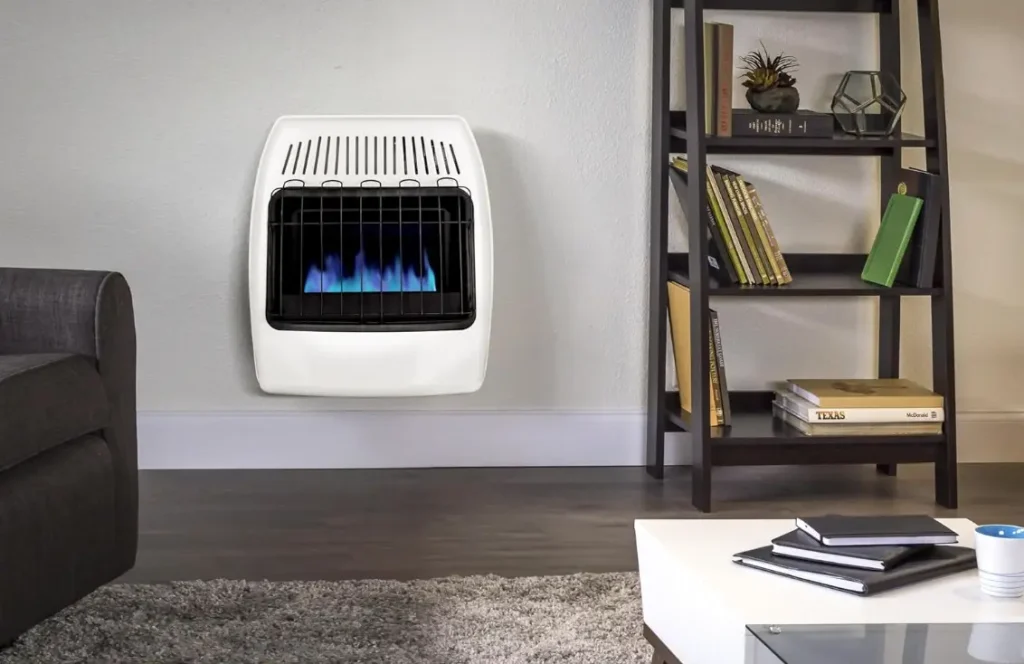
Image: amazon.com Dyna-Glo
But, can you leave a gas heater on overnight if you’re just stepping out for twenty minutes? Same answer.
It’s not about the clock, it’s about supervision. You can’t detect a mechanical failure or signs of a gas leak while you’re asleep. That’s why you need to turn it off.
Two risks explain why you can’t leave a gas heater on overnight:
Carbon monoxide comes from incomplete combustion. But, you can’t see or smell it. And that’s the problem.
If fuel-burning appliances like furnaces or stoves don’t work right or lack airflow, this toxic gas can build up fast in closed spaces.
To make it worse, running bathroom fans, dryers, or rangehoods creates negative pressure. That lack of airflow pulls carbon monoxide down the chimney and straight into your bedrooms.
Early symptoms look like the flu. Think of headaches, and nausea that’s easy to mistake for fatigue. But if ignored, they lead to unconsciousness or even death.
You might notice the gas leak symptoms while awake, but overnight, there’s no one to catch them, making timing critical.
The second risk is more familiar but no less real. And the heater type changes the danger level. Older open-flued heaters pull air from inside the room, while modern room-sealed heaters pull air from outside.
Both can fail overnight. Curtains, bedding, or laundry too close to a heater are fire hazards. Alternatively, faulty components or a blocked flue can cause a fire on their own, without help from nearby fabric.
Add an unattended appliance running for eight hours while everyone sleeps, and you’ve removed the one safeguard that catches most fires early—a person to notice smoke before it spreads.
You’ll see infrared, oil-column, and ceramic heaters sold as safe for overnight use. But these are electric, so they don’t burn fuel and won’t produce carbon monoxide.
Still, they aren’t risk-free. Electric heaters can overheat or spark a fire. Don’t leave any portable heater on while you sleep.
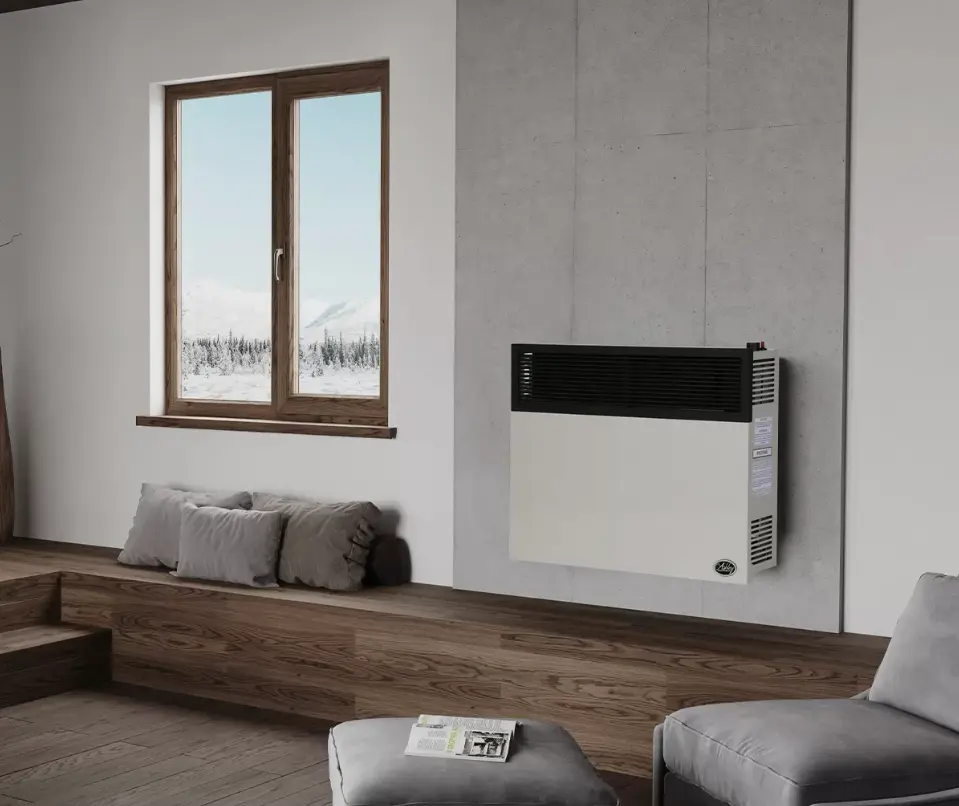
Image: Walmart.com Ashley
What about gas heaters? They burn fuel, which creates exhaust that needs to go somewhere. If your heater is faulty, or lacks proper airflow, dangerous carbon monoxide can build up.
That’s how a gas heater works, and it’s why you need regular service.
Room-sealed gas heaters are safer than open-flued models since they draw air from outside. Even so, you should turn off your heater before bed. If something goes wrong at 2 AM, you won’t be there to respond quickly.
Your range hoods, bathroom fans, and vented dryers pull air out of your home. If fresh air can’t replace it, indoor pressure drops. This creates negative pressure.
Air then enters wherever it can. In homes with an open-flued gas heater, that path may be the heater’s flue.
An open-flued heater draws air from the room and relies on the flue to vent exhaust outdoors. Strong negative pressure can reverse that flow, pulling combustion products into your living area.
The risk is higher in sealed Melbourne homes. New windows, draught sealing, and insulation restrict fresh air, while powerful fans increase extraction. A heater that worked fine before may no longer be safe.
So, how do you protect your home? Don’t run extraction fans while using an open-flued heater. Opening a window isn’t a substitute for proper ventilation or professional testing.
The danger is worse at night, since you won’t notice a problem while you’re asleep. Hire a professional for gas leak detection to check for negative pressure and carbon monoxide spillage, especially after renovations.
Under the Building Act 1993, only licensed professionals can perform gas work. DIY attempts could lead to a fine of 500 penalty units, which is roughly $101,755.
This penalty exists because unlicensed gas work often causes dangerous failures. And you need to know who to call for a gas leak.
To protect you, the Building and Plumbing Commission (BPC) keeps a public register. So, you can check your tradesperson’s credentials before they touch a gas line.
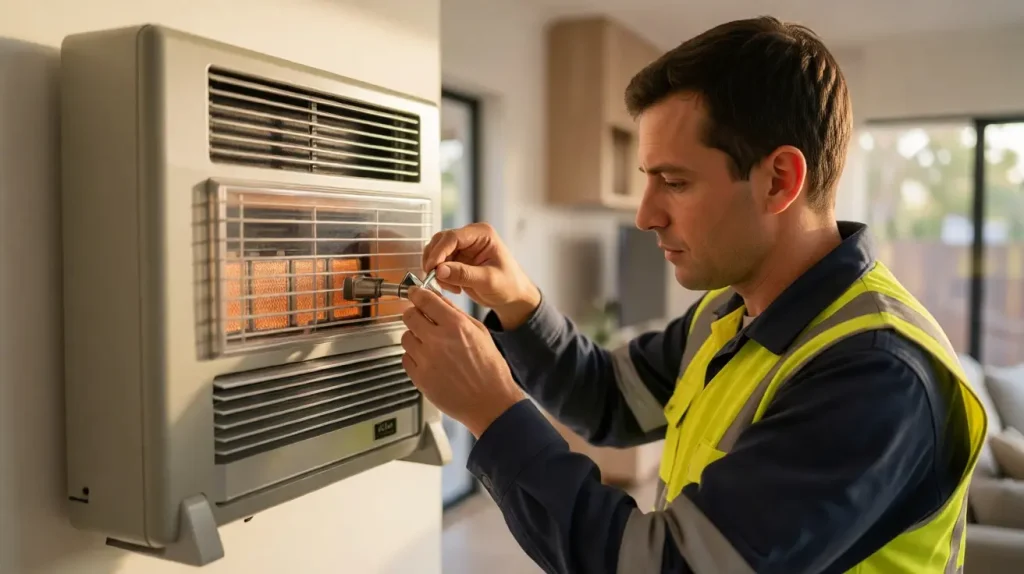
And when a qualified professional is on-site, a legal service isn’t just a basic clean. They must inspect the flue and cowl, check the room’s air supply, and perform dedicated negative pressure smoke and spillage tests.
Remember, every step of this diagnostic checklist must be logged under Appendix E and kept on record for seven years.
Upon completion, the gasfitter must give you a gas servicing record. Keep this as you’ll need this document for future property sales and insurance protection.
Heater rules have tightened. Since 1 August 2022, open-flued gas space heaters must include a fail-safe that shuts the unit down within 15 minutes if it spills combustion products under negative pressure.
Please note, the unit won’t reset itself. A licensed gas fitter must physically reset it after confirming the installation’s safe.
If you’re looking to stay warm on a freezing night without taking risks, a few safe strategies exist:
The Gold Standard for Safety: No alarm or cracked window can replace a safe appliance. Energy Safe Victoria recommends you have all gas heaters serviced by a professional at least once every two years.
These are the questions most Melbourne homeowners ask about leaving a gas heater on overnight:
Don’t. Energy Safe Victoria advises against leaving any flued heater on overnight. While newer, room-sealed units pose less risk than older open-flued models, the risk isn’t zero. Switch the appliance off before bed.
No. Never bring outdoor heaters inside, and don’t leave them running unattended. Enclosed patios and alfresco areas trap carbon monoxide just like indoor rooms, especially when screens or blinds are down.
A rental provider who skips a required gas safety check breaches their obligations. If you’re a renter, request the latest gas safety record in writing.
Consumer Affairs Victoria requires providers to act immediately on urgent repairs. If they don’t, you may arrange repairs up to $2,500 and seek reimbursement through the prescribed process.
Watch for yellow or orange flames, soot, or window condensation. If symptoms ease when you leave, that’s a red flag. These signs aren’t proof, though. You’ll only know with a CO spillage test from a licensed gasfitter.
Leaving a gas heater on overnight isn’t worth the risk, no matter how new the unit.
Carbon monoxide doesn’t give a warning, and a heater that’s overdue for a service is the appliance most likely to leak it. That’s why Energy Safe Victoria recommends a service every two years by a qualified gasfitter.
Unsure when your heater had its last service? Melbourne Gas Plumber handles CO spillage testing, servicing, and full safety checks across Melbourne. Book a check right now.

Every week, we share practical insights based on the combined knowledge and real-world experience of our team. Our articles cover gas fitting, gas safety, appliance installation, hot water systems, maintenance and everyday plumbing issues, so you can make well-informed decisions about your gas plumbing needs.

Fill the form below and we’ll get back ASAP!

MGP! Thank you for help, honest pricing and high quality work. Thank you to Joe for pricing and the boys involved for replacing my hot water tank and fixing my gas leak for a reasonable price. 5 star response, 5 star service and 5 star price.
Joe was great. Very professional and quick. Gas hot water heater needed replacing, he was honest and upfront about what our options were. System was sourced and replaced within a couple of hours.
Fantastic service very responsive Joe is highly recommended and works very clean and neat..... good job well done....very happy... will use again and again

At Melbourne Gas Plumber, we're here to handle all your gas plumbing needs throughout Melbourne. With over 40 years of experience, we bring extensive local knowledge and expertise to every job.
QUICK LINKS
OPENING HOURS
Open 24/7