How deep are gas lines buried? Most homeowners think gas lines are buried deep enough that their usual digging won’t hit them.
That assumption can be dangerous. The actual gas line depth depends on local regulations and they can sometimes be shallower than a fence post hole.
So, whether you’re landscaping or working on a gas line installation, knowing the depths helps prevent accidents and service disruptions. Let’s learn about it!
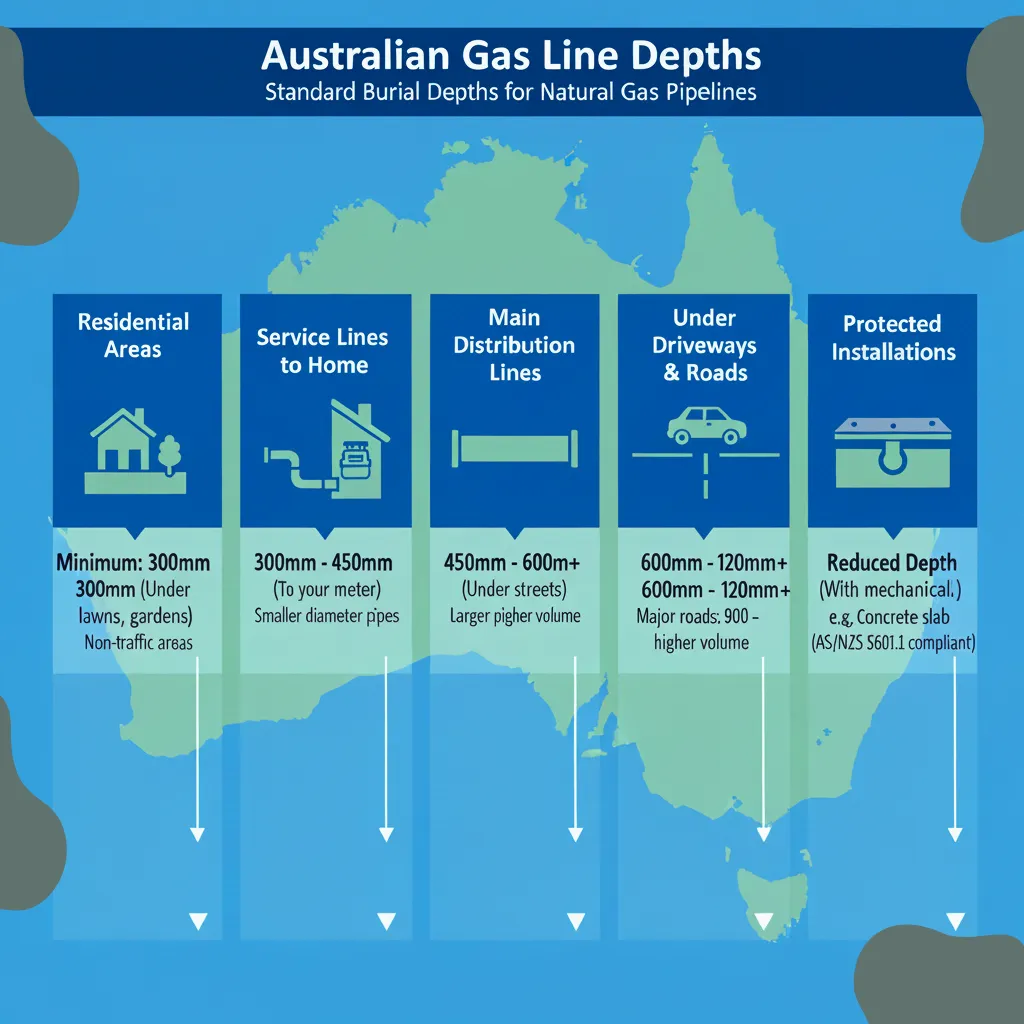
Gas lines are buried at a minimum of 300mm deep in areas without vehicle traffic. This is the baseline depth you’ll find in most residential gardens, under lawns, and along garden beds.
While you might hear lower numbers, 300mm is the strict minimum for compliance in private gardens to avoid hitting pipes during routine digging.
The depth varies by location, with utility mains deeper than customer-owned service drops.
How deep are gas lines buried? It depends on these factors:
In Australia, standards like AS/NZS 5601.1 for pipes after your metre and AS/NZS 4645 for the utility’s pipes set the minimum depth.
For a typical low-pressure pipe in your garden, that’s about 300mm deep. But when the pipe crosses into a public footpath, it usually goes deeper, around 450mm or 600mm.
A “step” appears in the pipe’s depth at your property line. Don’t assume the pipe’s depth remains the same once it’s inside your yard.
The surface material shields the pipe and determines its burial depth.
Under a concrete driveway, the pipe needs to be at least 450mm deep to handle vehicle weight. In a garden bed or lawn without concrete, 300mm of soil cover is usually enough.
If you remove a concrete path to plant grass, be careful, it’s easy to leave the pipe too shallow, as it was originally installed with the concrete in place.
Ground composition affects pipe stability. Sand, clay, rock, moisture, and compaction all influence load transfer, settling, and restraint.
In Australian soils, especially reactive clays like H1 or H2 sites, ground movement can shift pipes by 50mm to 80mm or more when wet or dry.
For rocky or aggressive ground, a 75mm sand bed is needed. In clay areas, pipes installed 300mm deep years ago may have shifted upward due to ground movement and now sit near the surface.
Pressure defines the hazard zone. Your home connection is usually a low or medium pressure pipe, often yellow, made of nylon or polyethylene.
Because the risk is lower, these pipes can be buried at least 300mm deep on private property. In contrast, street steel mains carry over 1050 kPa. They are buried 900 to 1200mm deep to prevent major accidents.
Sometimes you might hit something hard like a concrete slab or a strip of heavy plastic while you’re digging. Don’t push it out or else the leaking gas meter can be one of the consequences.
When installers can’t dig deep enough, they are allowed to use these “protective measures” as a substitute for depth.
If you find a slab or conduit, it means the gas pipe is right underneath it. Usually, that’s a concrete slab at least 25mm thick or a heavy-duty plastic strip buried about 150mm above the pipe.
If you ask, “How deep are gas lines buried?”, then it depends on whether your home is in a residential or commercial area.
On residential streets, gas pipes are usually 300mm to 450mm deep with light traffic. In commercial areas, pipes are often buried 600mm to 900mm.
Most Aussie suburban homes connect to the natural gas grid via yellow pipes buried 300–450mm deep from a meter at the front.
In rural areas, many use LPG from backyard tanks or exchange bottles. These LPG lines run at higher pressure from the tank to the house.
While they follow similar depth rules (minimum 300mm), they are often installed by private gasfitters in simpler trenches.
Underground, space is tight. Gas pipes need a Minimum Separation Distance. It’s usually 100mm to 300mm from water, sewer, and electricity lines. This gap prevents interference and sparks.
In older suburbs with shared trenches, a gas pipe may run under a water main or over a sewer connection just to keep that distance.
If you see a water pipe at 600mm, don’t assume the gas is at the same level. It could be 300mm shallower to maintain the required separation.
Here are things to do to maintain your gas pipeline underground
Keep the area above underground gas pipes clear. Don’t plant trees, build, or pile things over them. Keep heavy objects, driveways, and sheds away from the marked zones.
Make sure you can see the meters or marker tape so you can get to them easily. That way, you and emergency workers won’t accidentally damage anything during yard work.
Early detection keeps your family and home safe. Walk your yard often, especially near pipelines, and look for wet spots, ground dips, bubbles, or dead grass above the pipe.
If you smell a rotten egg odour, there might be a natural gas leak. Don’t dig. Call your gas company or a licensed plumber right away. Checking for surface changes is a key way to spot hidden gas line issues.
Check regularly for exposed pipes, washed-out trenches, or spots where soil looks lower, especially after storms or heavy rain. Fix patchy lawns, fill bare spots, and redirect water away from the pipes.
If your yard slopes, add retaining walls or erosion plants to stop the ground from sliding. Keeping the soil stable helps prevent pipes from getting exposed or damaged.
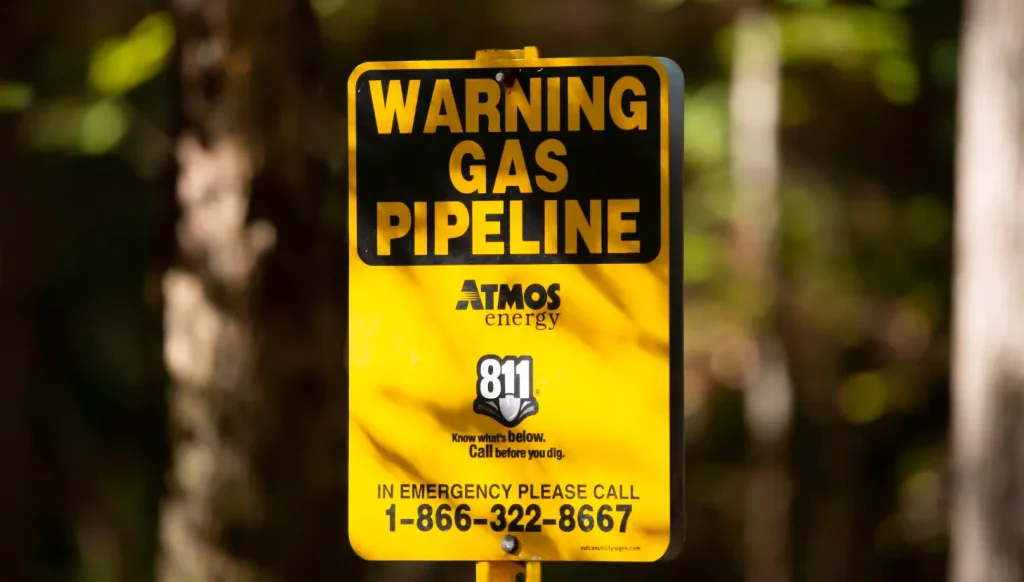
Good signs and records help protect your underground pipes from damage later on. Make sure marker tape, warning posts, or gas tags are easy to see. Don’t hide them.
Keep the info about where the pipes are up to date, and update your household records if you change your landscaping or do any digging.
Always call “Dial Before You Dig” before digging, planting, fencing, or doing any earthworks deeper than a shovel’s depth.
They give free maps of underground pipes like gas, water, and electricity. It helps you avoid dangerous breaks or expensive repairs. It’s the law in Australia to keep underground gas pipes safe.
You don’t have to do the technical work. If you notice ground movement or leaks, call a licensed gasfitter or plumber. They’ll do a pressure test, find leaks, and check pipe depth and condition.
If your pipes are old or you need gas meter adjustment, they can inspect for rust or suggest replacing them. Regular checks every few years keep your pipes safe and up to code.
Some of the questions homeowners ask about underground gas pipes are:
The main standard is AS/NZS 5601.1:2022. It covers the minimum burial depths, approved pipe materials (black iron, PVC, poly), installation steps, and safety rules.
Another standard, AS/NZS 4645.1, deals with the main distribution infrastructure. Each state uses these standards but with a few small differences.
Yes, but only with strict precautions. The pipe needs to be fully covered or protected inside the concrete, with at least 75mm of concrete over it.
That cuts the depth from 300mm down to 75mm because concrete protects better than soil. Also, gas utilities must approve before pouring, and marker tape should be placed above the pipe.
Yes. Gas line damage from shovels is common in Australia. At 300mm deep, especially in loose soil, it’s easy to hit a pipe. Even dents or bends can weaken it, and composite and polyethylene pipes are the most at risk.
Keep at least 1 metre horizontally before contacting BYDA, then 300-450mm laterally from the marked lines depending on pipe size, and 150mm vertically when crossing utilities.
Stay outside the zone until utility staff says it’s safe. If you need to dig closer, hire professionals and hand-dig with supervision.
The standard depth is at least 450mm below finished ground, measured to the pipe’s top. This helps prevent damage from vehicles and maintenance.
Some utilities require 500-600mm for driveways, depending on soil and traffic. Always check with your local utility first—conditions like soil, frost, and traffic might need it deeper.
Never guess how deep your gas lines are buried. Hitting even a shallow pipe can cause dangerous leaks or explosions.
Assuming you know the depth is risky, but now you understand the key factors affecting gas pipe depth and how to maintain underground pipes safely. Awareness is your best defence.
Still, if you’re unsure, always seek professional help. Call us at Melbourne Gas Plumber, and we’ll assist with locating, inspecting, and protecting your underground gas pipes.

Every week, we share practical insights based on the combined knowledge and real-world experience of our team. Our articles cover gas fitting, gas safety, appliance installation, hot water systems, maintenance and everyday plumbing issues, so you can make well-informed decisions about your gas plumbing needs.


Fill the form below and we’ll get back ASAP!

MGP! Thank you for help, honest pricing and high quality work. Thank you to Joe for pricing and the boys involved for replacing my hot water tank and fixing my gas leak for a reasonable price. 5 star response, 5 star service and 5 star price.
Joe was great. Very professional and quick. Gas hot water heater needed replacing, he was honest and upfront about what our options were. System was sourced and replaced within a couple of hours.
Fantastic service very responsive Joe is highly recommended and works very clean and neat..... good job well done....very happy... will use again and again

At Melbourne Gas Plumber, we're here to handle all your gas plumbing needs throughout Melbourne. With over 40 years of experience, we bring extensive local knowledge and expertise to every job.
QUICK LINKS
OPENING HOURS
Open 24/7