Waking up to a freezing shower is a frustrating way to start a morning. When you have no hot water, you need to know what’s wrong.
Before you assume the worst, check the clues. A tripped switch, interrupted gas supply, faulty thermostat, or worn part can all give the same result.
This guide helps you figure out a simple supply issue from an appliance fault, run safe checks, and know when to call a licensed gas fitter. Keep reading.
First, check if your hot water system runs on gas or electricity, since each type needs different safety checks.
Gas units can have a pilot light, a status window, and a flue to release combustion byproducts. Continuous-flow gas units are small, sit outside, and feature an exhaust point.
Some plug into a power outlet for electronic ignition and controls, but they remain gas-powered, not electric.
Electric storage units often come with a large cylinder, wires, and no flue. A heat pump is easier to spot because it has a fan or compressor.
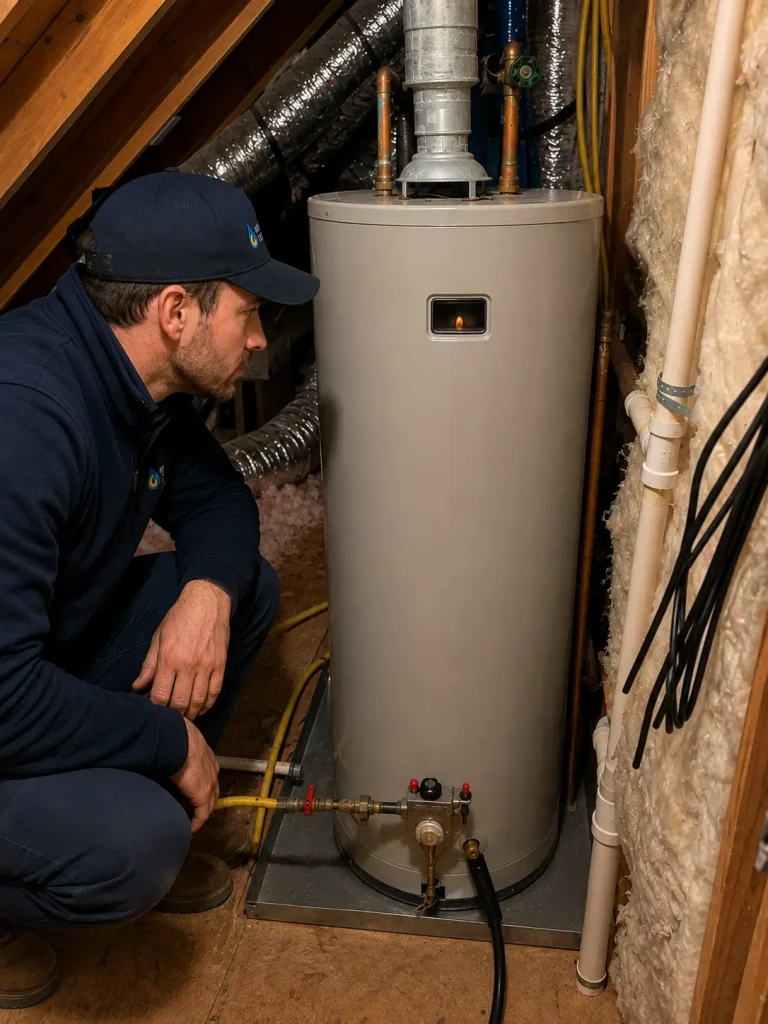
Use these details as hints, not a diagnosis. If you’re not sure, look at the data plate and model number on the unit. Why?
In Victoria, gas water heaters fall under Type A gas appliances, so you need a licensed gasfitter who has the correct Type A authorisation to work on them. Electrical issues, though, need a licensed electrician.
Get the system wrong, and you might take the wrong steps or call out the wrong trade.
If you’re still unsure, check out the gas vs electric hot water systems page, but rely on the data plate for ID.
Once you know which system you have, here’s where to start looking:
On a gas storage system with a standing pilot, no flame could mean the pilot went out after a brief gas interruption or wind. It doesn’t mean the heater is broken.
If the pilot relights but keeps going out, there’s a problem. The thermocouple could be the issue, but ignition, gas-control, or other safety faults might too.
Don’t keep relighting it. Follow your manufacturer’s instructions or check our guide on how to relight a gas pilot light safely.
Remember, continuous-flow gas systems need electricity for ignition and controls, so a power outage can cause no hot water even with gas supply intact. If power is on, ignition or control faults might stop the burner.
You need to also check other gas appliances. If only the water heater is affected, the issue is inside. But, if all appliances are out, a property-wide or distributor gas interruption is likely.
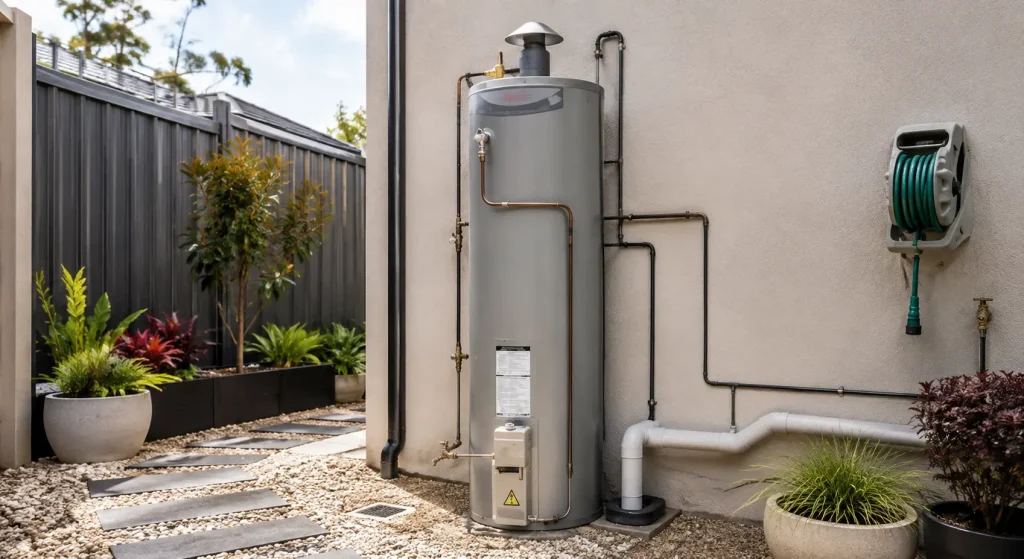
An electric storage cylinder gets cold if heating components fail—either it lost power or an internal part stopped the element from heating.
Start by checking the power supply. A tripped hot-water circuit breaker or safety switch cuts power to the cylinder. The heating element can also trip the circuit protection.
If power stays on but the tank stays cold, the issue is inside. A burnt-out element can’t heat, and a faulty thermostat or safety control can stop power to the element.
Please note, some Melbourne homes use controlled-load or off-peak electricity via a separate circuit. If that supply, metering, or switching fails, the tank stays cold while the house works.
A tripped circuit doesn’t show what failed. If the tank stays cold with power or there’s a controlled-load fault, a licensed electrician needs to test.
Hot water that starts normal but fades during a shower isn’t the same as a completely cold tap. Your system heats water, but it doesn’t store enough or recover heat quickly enough.
In older systems, sediment cuts tank capacity and hinders heat transfer. A slow loss of hot-water capacity, with strange noises like rumbling, suggests sediment. But these signs alone don’t confirm the cause.
Household demand can also cause this. Back-to-back showers, extra people, or a high-flow showerhead can empty a tank faster than it reheats. Plus, aging systems recover slower as performance drops.
A system’s history can help you figure out if you have a capacity or fault issue. If it’s always struggling during busy times, it’s a capacity issue. If it handled things fine before but now cools down faster, it suggests a fault.
A little water from the pressure and temperature relief (PTR) valve can be normal as it heats and expands. But, a constant drip means there’s a problem that needs checking.
Remember, never block the relief drain pipe. It protects the tank.
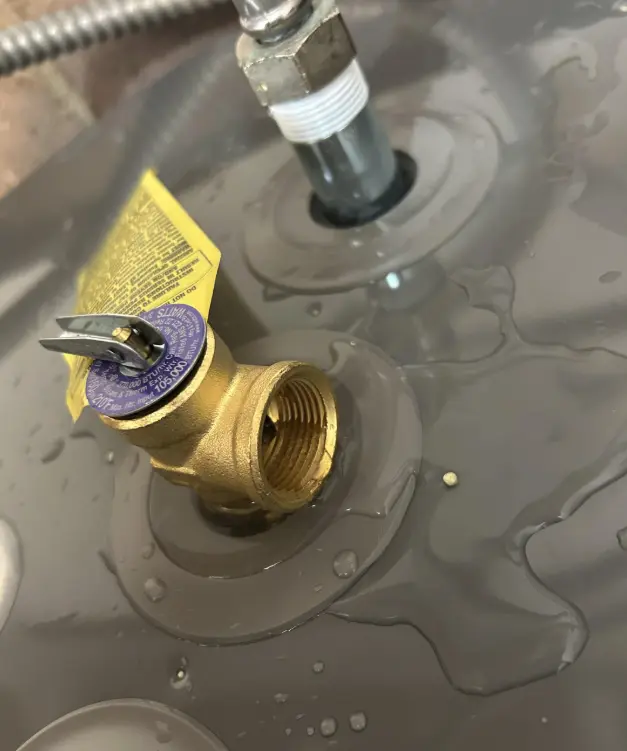
Image: stoner808 on Reddit
Water around the base is worrying, especially with older systems. Tanks use a sacrificial anode to stop rust, but it wears out. Once a tank rusts and leaks, replacing it’s usually best.
So, check where the water is coming from first. A leaky pipe or seal can look like a bad tank and might be fixable. Water from the tank itself means it needs replacing.
You can do some basic troubleshooting on your own. But the moment you need to open up the appliance, test internal parts, or touch gas fittings or electrical components, that’s a job for someone licensed.
The line between safe and dangerous is sharp.
You can handle these
Don’t attempt these
DIY gas repairs are illegal in Victoria. Serious fines apply. The rule is straightforward: basic checks are your responsibility, anything inside the box is not.
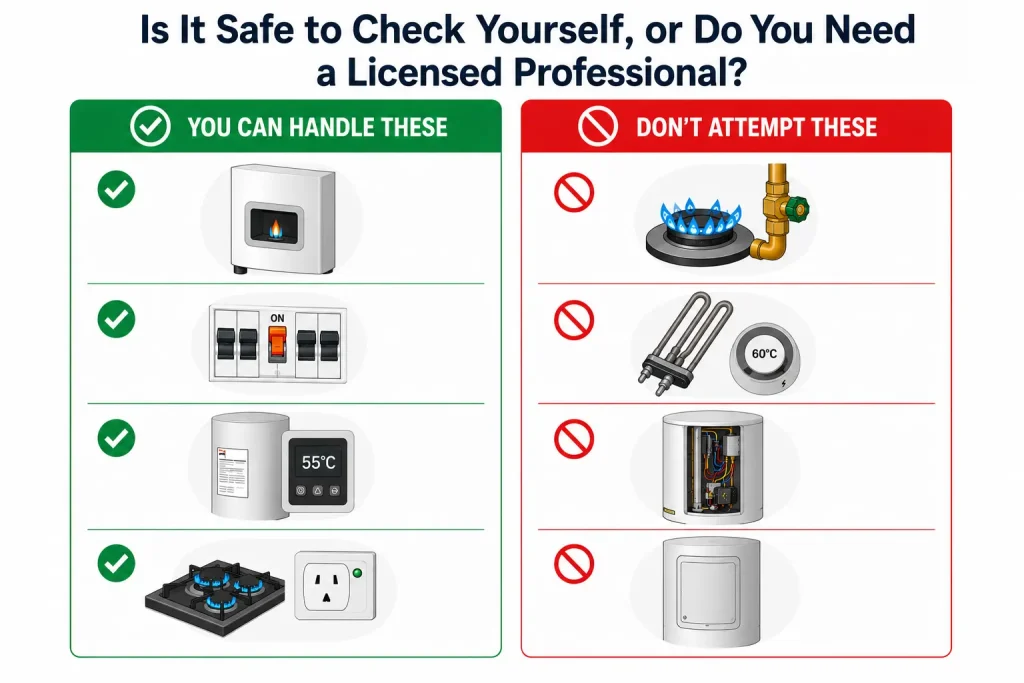
Most hot water failures come from a supply problem, power issue, capacity limit, or broken part. A status-light check or safe breaker reset may narrow down the cause, but repairs belong with the licensed trade.
Still no hot water after checking the basics? Melbourne Gas Plumber offers gas hot water installation and repair across Melbourne, with a $0 callout fee and same-day service for bookings made before 10:30 am. Contact us today
These are questions Melbourne homeowners often ask about having this issue:
Melbourne Gas Plumber offers same-day service across Melbourne if you call before 10:30 AM. Our vans carry common replacement parts, so most straightforward faults get fixed in one visit.
Yes. Relighting a pilot light yourself is legal and safe, as long as you follow the manufacturer’s manual. But if the pilot keeps going out, stop. Repeated dropouts mean it’s time for a licensed gasfitter.
It is. The Gas Safety Act 1997 is clear: only a licensed gasfitter with a Type A servicing endorsement can repair or replace gas hot water appliances. Do it yourself and you’re breaking the law, and possibly voiding your insurance.
Check the unit. A pilot window or external flue means it’s gas and needs a licensed gasfitter. No flue and electric-only means an electrician. Melbourne Gas Plumber can confirm the right trade on your first call.

Every week, we share practical insights based on the combined knowledge and real-world experience of our team. Our articles cover gas fitting, gas safety, appliance installation, hot water systems, maintenance and everyday plumbing issues, so you can make well-informed decisions about your gas plumbing needs.


Fill the form below and we’ll get back ASAP!

MGP! Thank you for help, honest pricing and high quality work. Thank you to Joe for pricing and the boys involved for replacing my hot water tank and fixing my gas leak for a reasonable price. 5 star response, 5 star service and 5 star price.
Joe was great. Very professional and quick. Gas hot water heater needed replacing, he was honest and upfront about what our options were. System was sourced and replaced within a couple of hours.
Fantastic service very responsive Joe is highly recommended and works very clean and neat..... good job well done....very happy... will use again and again

At Melbourne Gas Plumber, we're here to handle all your gas plumbing needs throughout Melbourne. With over 40 years of experience, we bring extensive local knowledge and expertise to every job.
QUICK LINKS
OPENING HOURS
Open 24/7