A gas-boosted solar hot water system uses solar panels as the primary heat source with an inline gas backup. Melbourne homeowners often choose it for instant hot water on cloudy days and low running costs.
But is it the right system for your home? This article will explain how it works, compares gas and electric boosts, and clarifies when to ask gas hot water installation services in Melbourne for help. Keep reading!
A gas-boosted solar hot water system is a hybrid setup that combines roof-mounted solar collectors with an inline, continuous-flow gas booster.
The system bridges the gap solar alone can’t always cover. Melbourne’s cloudy stretches, winter months, and peak hot water demand mean there’ll be times when roof collectors don’t capture enough heat.
And that’s where the gas booster steps in. If your solar-heated water drops below a pre-set minimum temperature, like 60 degrees Celsius, the gas burner starts.
So the ‘boost’ is the backup heat source, which is a gas burner instead of an electric heating element.
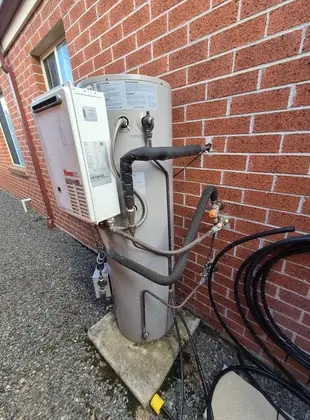
Image: Professional-Map-392 on Reddit
And unlike electric boosters that heat water stored inside the tank, this gas unit heats water as it flows to your taps on demand.
Continuous-flow gas boosters can provide up to 26 litres per minute, so you have hot water whenever you need it. With electric boosters, recovery times depend more on your tank’s baseline volume during high simultaneous usage.
Also, the compact gas module mounts on or near the solar tank. It isn’t a separate gas hot water system.
That design stops the unit from reheating stored water, which saves energy. If your solar water is warm enough, the gas stays off and the water flows right through.
The system works in two stages: solar heat when it’s available, gas backup when it’s not.
Here’s how it works step-by-step:
And remember that the two system setups decide where the booster connects.
In a thermosiphon system, the tank sits on the roof above the collectors. Hot water rises naturally, so you don’t need a pump. The gas booster connects at the tank outlet.
In a split system, the tank sits on the ground, and a small pump moves water between the tank and roof collectors. The booster connects to the ground tank.
You can choose a split system if your roof can’t hold the tank weight or if you want to hide it from view.
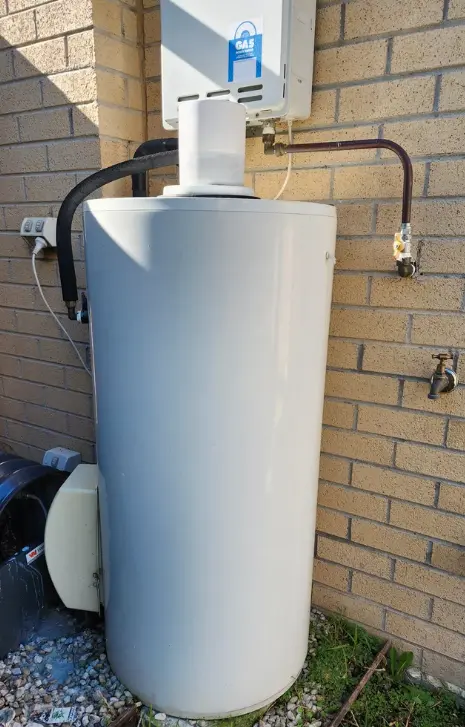
Image: CommissionOld8986 on Reddit
Please note that the booster works like a standard gas unit. To give you an idea, you can check how a gas hot water system works.
Don’t forget, Melbourne winters bring low solar gain and occasional overnight frost, especially on the outer suburban fringe. Systems in frost-prone areas need built-in frost protection.
Freezing water can crack pipes, turning a small fix into a full replacement. The cost is minor compared to the total install, but your gas fitter should flag it during the quote.
Still choosing between gas and electric boost for solar hot water? This guide helps you decide:
You might choose a gas-boosted solar hot water system if these factors matter to you:
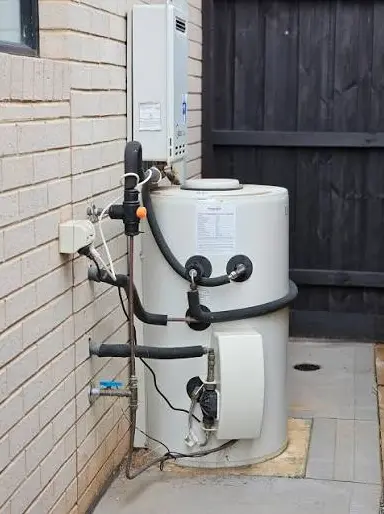
Image: Paul Ta on Facebook
An electric-boosted solar hot water system is a good option if these things matter to you:
If you’re already on mains gas and want reliable backup or faster hot water recovery, choose a gas-boosted solar system.
But if you’re going all-electric, building new in Victoria, or have no gas connection at home, you can choose an electric booster.
Also, Victoria’s 2024 gas ban for new homes requiring a planning permit and the phased 2027 building electrification regulations mean electric is the clear path forward for new constructions.
Still not sure which option is good for a hot water system? Check out the breakdown in gas vs electric hot water systems.
Expect to pay $4,500 to $8,500 for a fully installed gas-boosted solar hot water system in Melbourne.
These cost more than electric versions due to gas components and connection fees. Your final price depends on tank size, roof accessibility, and gas line requirements.
The good news is that federal and state rebates lower that price.
First, you receive Small-scale Technology Certificates (STCs). Because Melbourne is in Zone 3, a typical 2026 system creates about 23 certificates. This cuts your cost by $800 to $920.
Next, you have Victorian state rebates. Solar Victoria offers up to $1,000 for eligible homes, or up to $1,400 if you pick a local product. This rebate covers 50% of your cost after the STC discount.
You can also use the Victorian Energy Upgrades (VEU) program to save another $560 to $700, depending on your old system. There are no income limits for VEU, and it is deducted from your price at the point of sale.
After installation, your costs stay low because gas boosters only fire when you need them. Just make sure you have a gas connection. If you don’t, you need a new line. Check gas line installation cost for details.
Gas work is licensed work. You need a licensed gas fitter for any gas work on your solar hot water system. That includes the booster, pipes, fittings, testing, and commissioning.
Every installation must follow AS/NZS 5601.1. This standard covers pipe sizing, appliance clearances, pressure tests, and airflow for Type A gas appliances. It applies to new systems and booster replacements.
Don’t forget, once the work is done, get a Certificate of Compliance and keep it safe. You’ll need it for insurance claims and as a helpful record of professional work when you sell your home.
Even so, you can’t just hire any gas fitter. Before you book, check your installer’s credentials at https://vba.vic.gov.au.
Additionally, please confirm who handles each part of the project. Solar collectors and tank plumbing may need separate licences.
Also, ask what the Certificate of Compliance covers. Make sure your gas fitter does the whole job, not just the basics.
You need to check if there’s a main gas line before installing a gas-boosted solar hot water system. If you don’t have gas, ask one question: Does your project need a planning permit?
Since 1 January 2024, Victorian Amendment VC250 has banned new gas connections for homes and subdivisions that need a planning permit.
So, under these rules, you can’t install a gas-boosted solar hot water system. This ban will apply to almost all new homes from 1 January 2027.
If you own a home with a gas connection, you’re fine. The 2024 rules don’t stop you from installing a gas-boosted solar hot water system or replacing an existing gas booster.
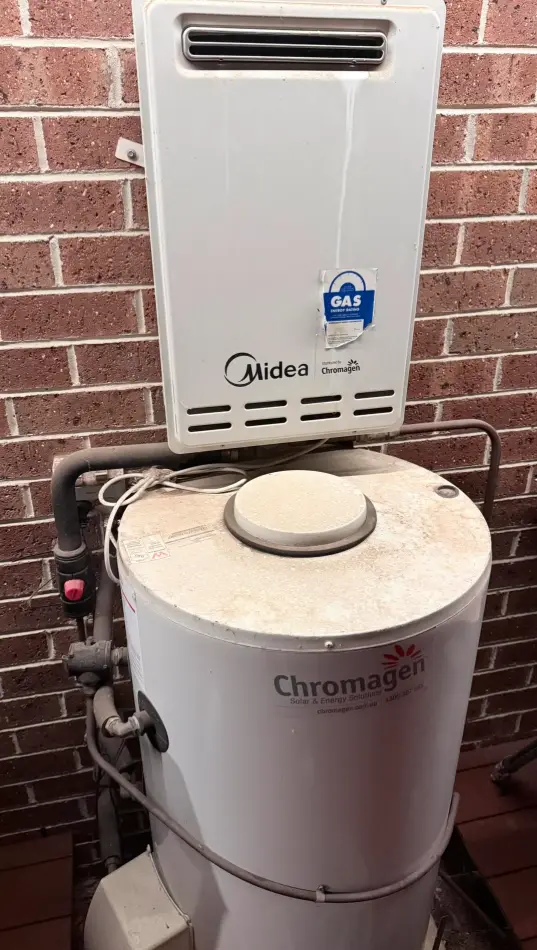
Image: Jades Chore on Facebook
But watch the next deadline. From 1 March 2027, if an existing gas hot water system breaks and can’t be fixed, you must replace it with an efficient electric system, such as a reverse-cycle heat pump.
So, fix your unit before that date to keep it. If it breaks after that date, you must switch to electricity.
If planning rules or no gas connection stop you, install an electric-boosted solar hot water system or a heat pump. If your property qualifies, get a new gas installation assessment before you commit.
Here are some questions people ask about gas-boosted solar hot water in Melbourne.
It’s worth it if you’re on mains gas with high evening hot water use or need backup. The higher upfront cost pays off with faster recovery and no extra gas account. If you’re all-electric, think again about gas versus electric.
A continuous-flow gas booster has the same service-life profile as a standard unit. Manufacturer warranties on the heat exchanger usually last 10–12 years for major brands. Check current terms for your specific model.
Yes, every time. Any gas work including the booster, connections, or pressure parts must be done by a VBA-licensed gas fitter under Victorian law, even for routine servicing. You can clean solar collectors, but the gas side needs a licensed professional.
Generally, yes. The solar collectors and tanks stay. A gas fitter takes out the gas booster and pipework. An electrician puts in the electric element. The solar system works with the new electric boost.
Get a conversion quote and compare it to a gas booster replacement. For older systems, full replacement may be more cost-effective than conversion.
A gas-boosted solar hot water system is ideal for Melbourne homes with mains gas. You get free solar heat plus reliable gas backup on cloudy days.
The main factors in your decision include both the state’s upcoming rules for existing homes and Victoria’s new-build gas restrictions. Check your property status before you commit.
Not sure if gas or electric boost suits your home? Melbourne Gas Plumber’s VBA-licensed experts can assess your home and handle installation. Call before 10:30 am for same-day service across Melbourne.

Every week, we share practical insights based on the combined knowledge and real-world experience of our team. Our articles cover gas fitting, gas safety, appliance installation, hot water systems, maintenance and everyday plumbing issues, so you can make well-informed decisions about your gas plumbing needs.


Fill the form below and we’ll get back ASAP!

MGP! Thank you for help, honest pricing and high quality work. Thank you to Joe for pricing and the boys involved for replacing my hot water tank and fixing my gas leak for a reasonable price. 5 star response, 5 star service and 5 star price.
Joe was great. Very professional and quick. Gas hot water heater needed replacing, he was honest and upfront about what our options were. System was sourced and replaced within a couple of hours.
Fantastic service very responsive Joe is highly recommended and works very clean and neat..... good job well done....very happy... will use again and again

At Melbourne Gas Plumber, we're here to handle all your gas plumbing needs throughout Melbourne. With over 40 years of experience, we bring extensive local knowledge and expertise to every job.
QUICK LINKS
OPENING HOURS
Open 24/7