Choosing between a gas vs. electric oven can be tough, and it’s easy to feel overwhelmed. With so many tabs open right now, you want to make sure you have the right fit for your cooking style, kitchen, and budget, right?
This guide will make it simple. Whether you’re renovating, replacing an old unit, or thinking about a new gas installation, you’ll get a clear comparison to make a confident choice. Read on!
Before diving into the details, here is a quick comparison of both oven types for you:
| Factor | Gas Oven | Electric Oven |
|---|---|---|
| Best For | Roasting, casseroles, bread | Baking, pastries, delicate cakes |
| Installation Complexity | Higher. Needs a gas line and a licensed plumber. | Lower. Needs a dedicated circuit and a licensed electrician. |
| Upfront Cost | $800–$2,500+ | $650–$3,000+ |
| Running Cost | ~$5–$12/month (Standard usage) | ~$8–$15/month (Standard usage) |
| Heat Distribution | Uneven. Hot spots common | Even, especially fan-forced |
| Heat-up Speed | Instant flame (5–8 mins to 180°C). | Moderate to fast: 8–15 mins |
| Ventilation Required? | Yes (AS/NZS 5601.1:2022 standards) | Recommended, not mandatory |
| Works Without Electricity? | No (Modern models require power for safety) | No. |
In Victoria, both types must be installed by a professional: gas ovens by a licensed gas fitter Melbourne and electric ovens by a licensed electrician.
In a gas oven, the grill burner creates an open flame, while the bottom burner fills the oven with hot gases.
As air warms, a thermostat cycles the gas to keep temperature. Then, moisture from combustion mixes into the air, and vents release excess heat.
An electric oven works differently. It uses 240-volt elements that glow red-hot. On fan-forced settings, a rear fan circulates air across every shelf.
A thermostat pulses power to keep temperatures steady. With no flame, these ovens require less venting than gas models but still release steam for even results.
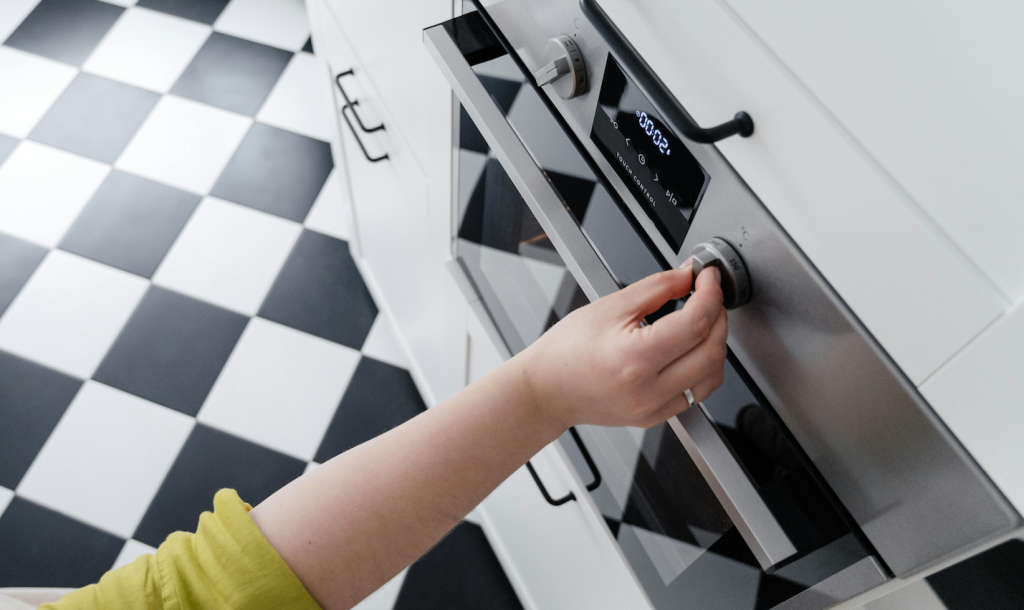
Image: MealPro on Unsplash
But did you know that many cooks prefer a dual-fuel setup?
Yes, they use a gas cooktop for instant flame control paired with an electric oven for steady, even baking. It is a practical choice offering the best of both energy sources.
Rather than picking one as the winner, the better question is: which oven fits how you cook?
Gas ovens heat fast, reaching 180°C in 5–8 minutes, but the heat is uneven.
The top can be 10–25°C hotter than the bottom. That’s why identical trays cook at different speeds and many cooks rotate trays halfway through.
And as the burner warms up, the oven releases water vapour, making it 8–15% more humid than electric ovens.
That helps roasts, bread, and casseroles stay juicy and brown well, but delicate treats like pavlovas, meringues, and thin biscuits may lose crispness.
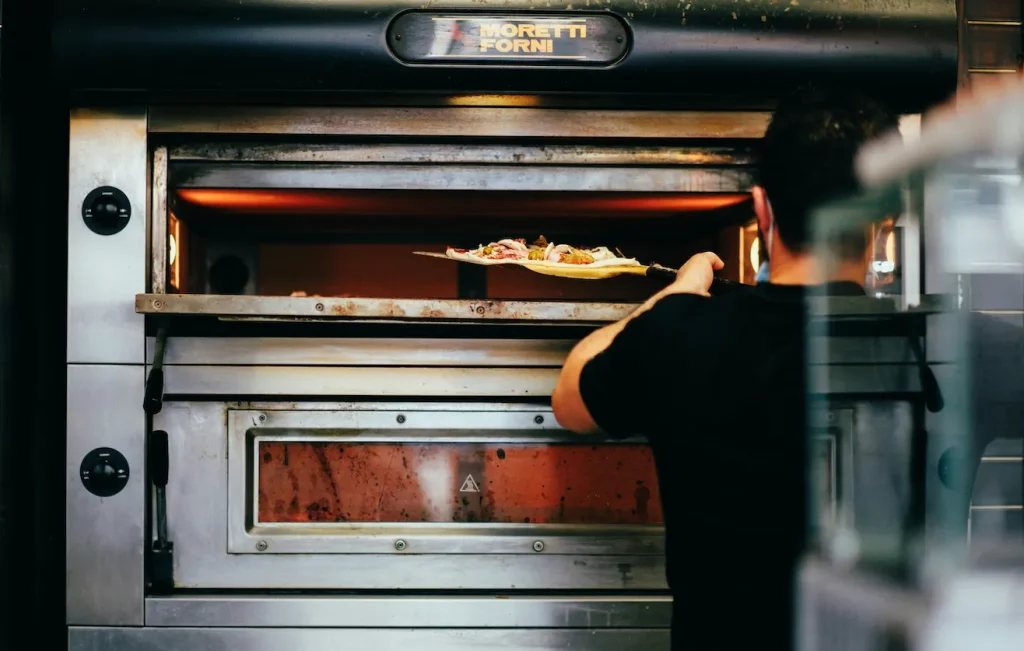
Image: Mathias Reding on Pexels
What’s more, gas ovens react faster to changes. Heating starts right away, and after opening the door they recover in 2–3 minutes while an electric one takes 5–7 minutes.
So if you check often while cooking, gas ovens save you time and energy.
Switch to baking pastries, or anything that needs even heat, and electric ovens have the edge. They’re well insulated and vented. Metal elements heat the cavity while a rear fan circulates air to every corner.
As a result, fan-forced systems keep temperatures consistent across all racks, so you can bake three trays of biscuits at once in a typical Melbourne kitchen without rotating them or fighting hot spots.
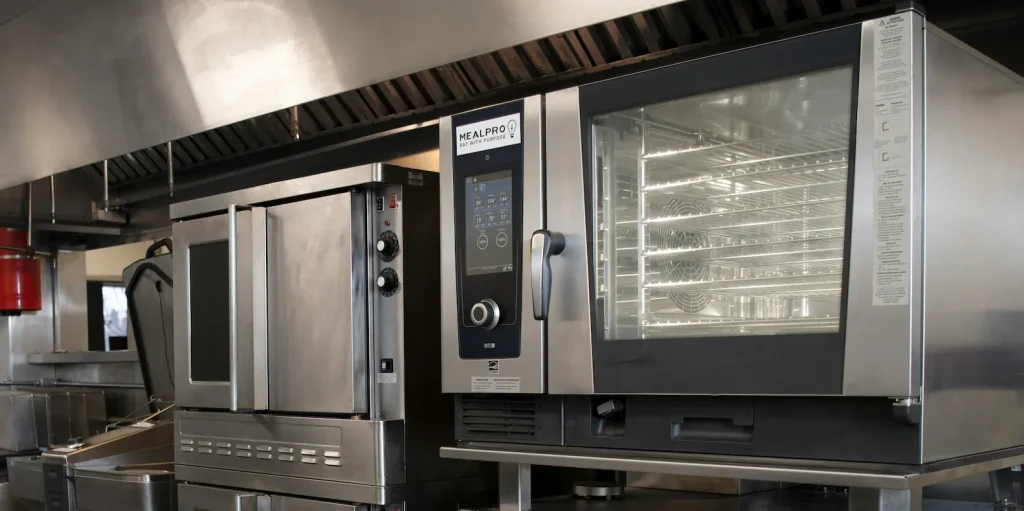
Image: SHVETS production on Pexels
Because electric ovens don’t involve combustion or added water vapour, they create dry heat that helps pull moisture quickly. This is key for crisp pavlovas, flaky pastries, and crunchy pizza bases.
Today, digital sensors send power right where it’s needed. You don’t get the big temperature swings older models have.
If you set the oven to 160°C, it stays close to that temperature, which is helpful for melting chocolate or proofing dough at low temperatures that gas burners struggle to match.
Without a combustion flue, electric ovens take about 10 to 15 minutes to reach 180°C, but they can keep that heat steadily.
Cooking performance matters, but weekly running costs matter just as much. In Melbourne, energy is priced around $0.038/MJ for gas and $0.28/kWh for electricity. The difference adds up fast.
Gas ovens are cost-effective. At 180°C, they use about 10–12 MJ per hour, costing roughly $0.40–$0.50 per hour. Baking for 2 hours a week is about $50–$80 a year (even after the ~$0.75/day supply charge).
Electric ovens cost more per hour. They use about 1.5–2.0 kWh per hour, which costs $0.42–$0.56 per hour, or $55–$85 a year for the same baking time.
Because electricity is more expensive per unit of energy in Victoria, bills are often higher, though time-of-use plans can reduce the effective rate to about $0.09–$0.27/kWh when cooking in cheaper periods.

Image: Katerina Holmes on Pexels
The gap is real, but solar can help close it. If you use an electric oven between 10am and 3pm on a sunny day, especially with rooftop solar, you can largely wipe out gas’s advantage.
To decide, you need to compare total costs: the oven price, installation, and your actual running costs based on when you cook.
Note: Running costs are estimates based on 2025–26 industry data. Actual costs vary by appliance rating and your specific tariff. Check your bill or Victorian Energy Compare for current rates.
The real difference between gas vs. electric ovens comes down to price and setup. One needs a gas line, the other needs high-amperage wiring, which most Melbourne kitchens already have.
Electric ovens cost less to buy. Entry-level 60cm models start at $400–$700, while gas models with basic features typically start at $800–$1,100+.
Electric installation needs a licensed electrician to hardwire the unit to a dedicated 15A or 20A circuit. This costs $200–$500 in Melbourne.
Installing gas takes more work, so it costs more upfront. You’ll need a licensed gas fitter to connect the line. That’s $300–$800 for labour and the mandatory Certificate of Compliance.
If you don’t already have a pipe in your kitchen, running new pipework will run you $500–$1,500+. It depends on how far it has to go and how many walls need drilling.
Remember, since January 2024, the state has made it harder to get new residential gas connections. If you don’t have gas in your home, the high costs and red tape make switching to all-electric a much better option.
Not sure what you need for your setup? Melbourne Gas Plumber offers free on-site checks. Call before 10:30 AM for same-day service.
If you are leaning toward gas, here is exactly what the installation process looks like, and why a licensed gas line installer is non-negotiable in Victoria.
A licensed gas fitter will visit for 15–30 minutes to assess the job and quote. If new pipework is needed, they install copper or steel lines from the main supply to your oven, drilling through walls while avoiding power lines.
Electrical wiring must be kept at least 25mm away under Australian Standards, and this typically takes 2–4 hours.
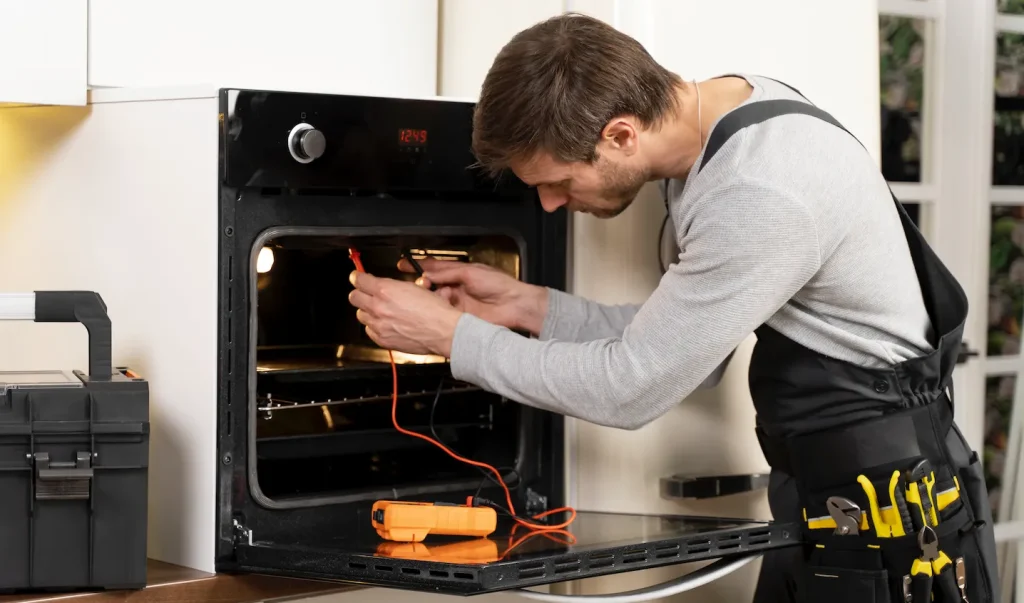
Image: freepik
Next, they connect the oven using a flexible hose and isolation valve for emergency shutoff. If the oven has electronic ignition, they also complete the 240V connection.
Then they run a mandatory 15–20 minute pressure test. If pressure drops, they use soapy water to locate and fix the leak. After confirming airtightness, they test the flame, thermostat, and safety switches.
You will then receive a Certificate of Compliance (AS/NZS 5601.1) for this gas cooktop installation in Melbourne, which the fitter lodges with the Building and Plumbing Commission (BPC).
You can either connect to natural gas mains or use LPG (bottled gas).
If a gas main runs along your street, check availability via AusNet’s online tool. After approval, installation usually takes 4–8 weeks.
You’ll pay a $1,960 (plus GST) connection fee and a licensed gas fitter will install the meter for $500–$1,500.
But if mains gas isn’t available, LPG is an alternative. A gas fitter can set up a cylinder and supply line, often with a conversion kit.
Upfront costs are typically $400–$600, but cylinders must be replaced every 6–12 months, costing about 90 cents to $1.05 per oven use.
Overall, LPG suits renters and anyone avoiding high upfront costs, while mains gas is cheaper long term for stays of 15 years or more.
If you choose an electric oven, a licensed technician must install it. They will check whether you have a dedicated 20-amp, 240V circuit for about 20–30 minutes.
If your setup isn’t suitable, they’ll need 2–4 hours to run a new 2.5mm² or 4mm² cable that meets AS/NZS 3000 standards. If the switchboard is full, an upgrade may take 3–6 hours and cost about $500–$1,200.
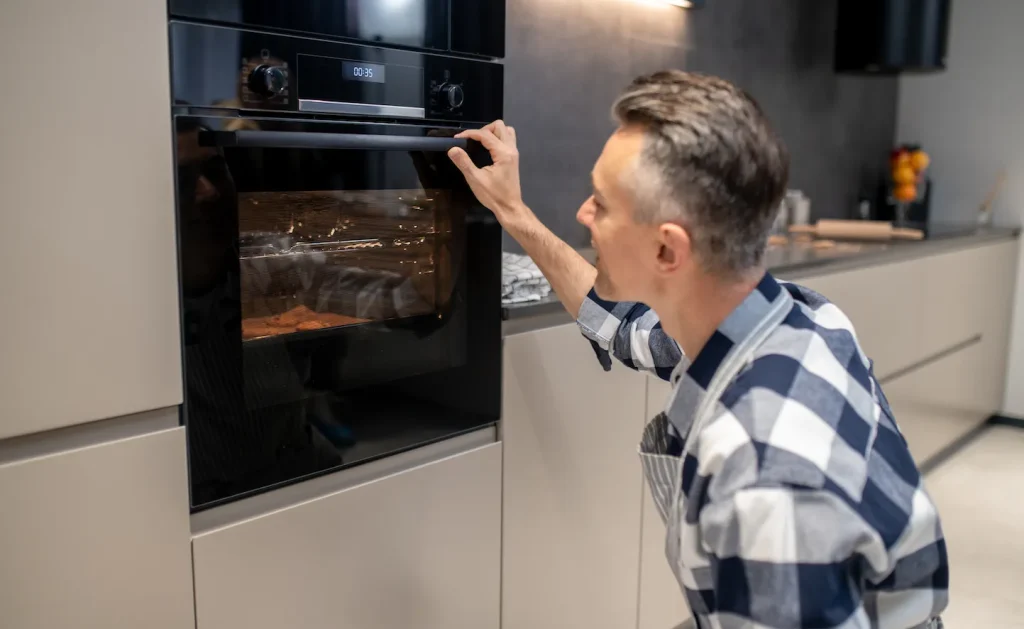
Image: zinkevych on Freepik
Remember, in Victoria, you can’t install this yourself. A professional must hardwire the oven to its own dedicated circuit breaker at the switchboard.
They will test voltage, grounding, and the RCD for around 20 minutes and issue a Certificate of Electrical Safety (COES), which helps with insurance and when selling. The total time is usually 4–6 hours.
Choosing between a gas or an electric oven is a choice between traditional fuel and cleaner energy.
Gas ovens release about 130–150 kg of CO₂ each year, which is the same as driving 800 kilometres. Electric ovens currently create 350–400 kg of CO₂, unless you use solar power.
But remember, as the power grid shifts to 95% renewable energy by 2035, electric will be your cleaner choice. Also, since you pay daily gas supply charges in Melbourne, gas often costs more if you only use it for cooking.
And please note that from 1 January 2027, all new Victorian homes must be all-electric.
So, if you’re planning to stay in your home for 10+ years, switching to electric is a smart move to avoid future connection fees and use a greener power grid. But, if you’re renting an older home, you’ll likely stick with gas.
Still have questions? Here are the ones homeowners ask most often:
Gas ovens usually cost less. You’re looking at $0.44–$0.46 per hour vs $0.78–$0.96 for electric. If you have rooftop solar and cook during the day, the gap shrinks. So, your best choice depends on your energy rates, cooking frequency, and whether you have solar.
Yes. All gas installations must be performed by a BPC-licensed gas fitter in accordance with AS/NZS 5601.1:2022. Your fitter will issue a Certificate of Compliance, protecting your insurance, warranty, and property records. You don’t need a permit. Your tradesperson handles all the paperwork for you.
Most gas ovens run on natural gas or LPG and include a conversion kit. If you’re not connected to the mains, LPG is a great choice. Hire a licensed gas fitter to install it, and budget for regular cylinder refills over the long term.
A dual-fuel range pairs the responsive heat of a gas cooktop with the precision baking of an electric oven. Just remember, you’ll need both a licensed gas fitter and an electrician for the installation. So, budget for both.
Gas line installation process takes a few hours. If new pipes or a mains connection are required, your gas fitter will confirm the timeline during their assessment. Note: Melbourne Gas Plumber offers same-day service if you call before 10:30 AM.
Both gas and electric ovens are reliable, so the right choice depends on your kitchen, cooking style, and home setup.
If you already have natural gas, a gas oven is cheaper, heats faster, and helps keep roasts and bread moist. If you prefer precise baking or want to use solar power, an electric oven is the better option.
Remember, for gas installation, always hire a licensed professional. And the Melbourne Gas Plumber team handles everything, from gas line connections to Certificates of Compliance. Contact us today.

Every week, we share practical insights based on the combined knowledge and real-world experience of our team. Our articles cover gas fitting, gas safety, appliance installation, hot water systems, maintenance and everyday plumbing issues, so you can make well-informed decisions about your gas plumbing needs.


Fill the form below and we’ll get back ASAP!

MGP! Thank you for help, honest pricing and high quality work. Thank you to Joe for pricing and the boys involved for replacing my hot water tank and fixing my gas leak for a reasonable price. 5 star response, 5 star service and 5 star price.
Joe was great. Very professional and quick. Gas hot water heater needed replacing, he was honest and upfront about what our options were. System was sourced and replaced within a couple of hours.
Fantastic service very responsive Joe is highly recommended and works very clean and neat..... good job well done....very happy... will use again and again

At Melbourne Gas Plumber, we're here to handle all your gas plumbing needs throughout Melbourne. With over 40 years of experience, we bring extensive local knowledge and expertise to every job.
QUICK LINKS
OPENING HOURS
Open 24/7