For instant heat, a gas cooktop beats an electric stove. And that’s what makes many homeowners think about switching. But the question is: can you convert an electric stove to gas?
The short answer is yes, but it isn’t a simple swap. You’ll need a professional for gas line installation, proper ventilation, and an expert evaluation to meet local code requirements. Read on!
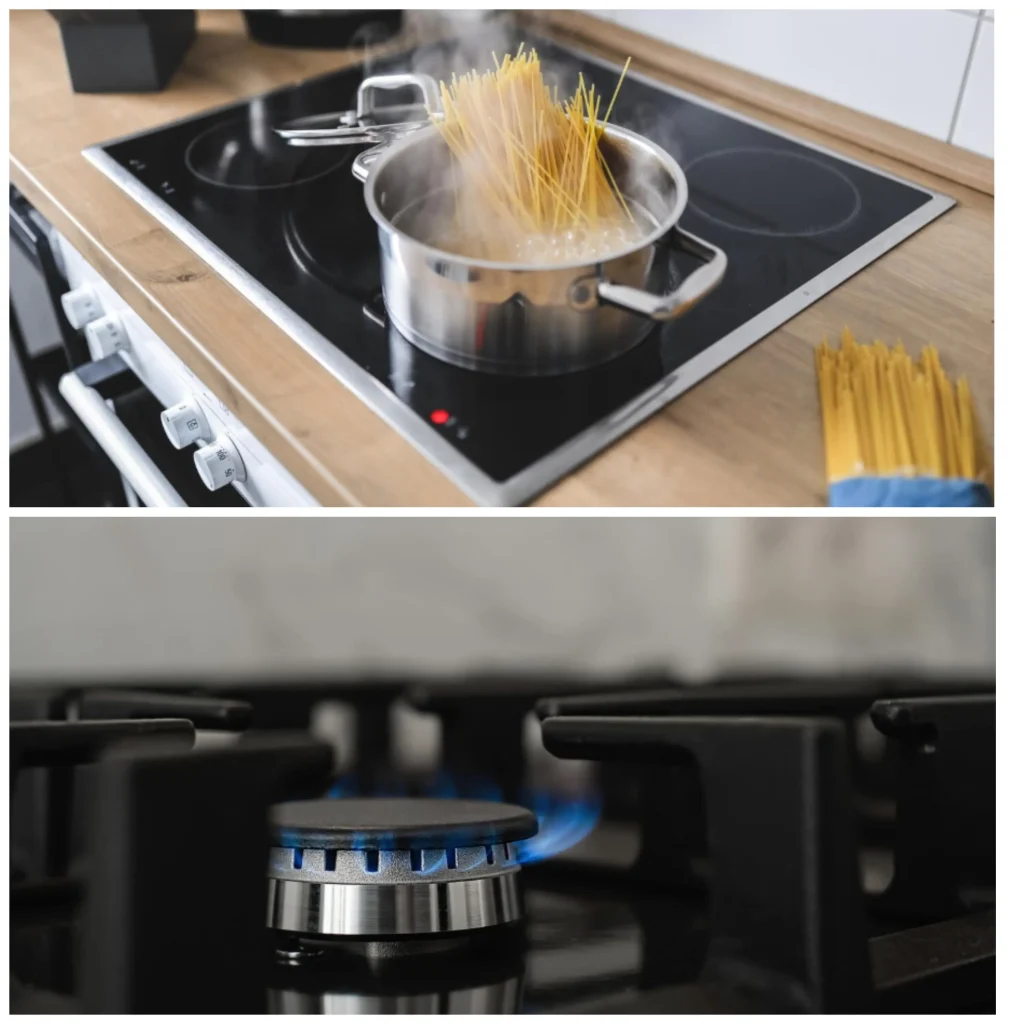
Image: ededchechine/valeria_aksakova on Freepik
As Victoria shifts toward an all-electric future, some Melbourne homeowners still prefer gas stove for specific reasons:
Gas stoves give you exact heat. Turn the knob, and the flame changes right away, so you don’t have to wait. This lets you sear a steak and then quickly lower the heat to finish a sauce without burning it.
Forget waiting for your burner to heat up. With a gas stove, you get full power the second you turn the knob. Your veggies sizzle the moment they hit the wok, and your eggs fry exactly when you’re ready.
For that authentic “wok hei” smoky flavor, you need a gas stove. The flame quickly heats your wok above 200°C, allowing you to sear the outside while keeping the inside perfectly crisp.
In Melbourne, summer and winter storms often knock out the power. When the lights go out and your electric stove stops working, gas lets you keep boiling water for tea, cooking pasta, or heating up dinner for the kids.
Gas burners give you clear, visual feedback. You can see the flame’s intensity right away. Once you turn them off, the heat stops right away, so you are less likely to leave them on by accident.
Gas stoves outperform electric or induction for daily cooking. So, how long does a gas stove last? A well-maintained gas unit lasts 15–20 years, compared to 10–12 years for induction.
And if a gas stove breaks, repairs are quick and affordable.
Yes, you can convert from an electric stove to gas. Just keep in mind that you can’t actually “convert” your old electric unit. You have to remove it entirely and install a new gas stove.
Since this is a complete swap, your kitchen must have enough space and clearance. And you’ll likely need to adjust your cabinet cut-out and countertop to fit the new stove.
For safety and compliance, a licensed plumber must install gas lines, and an electrician must disconnect the 240V power.
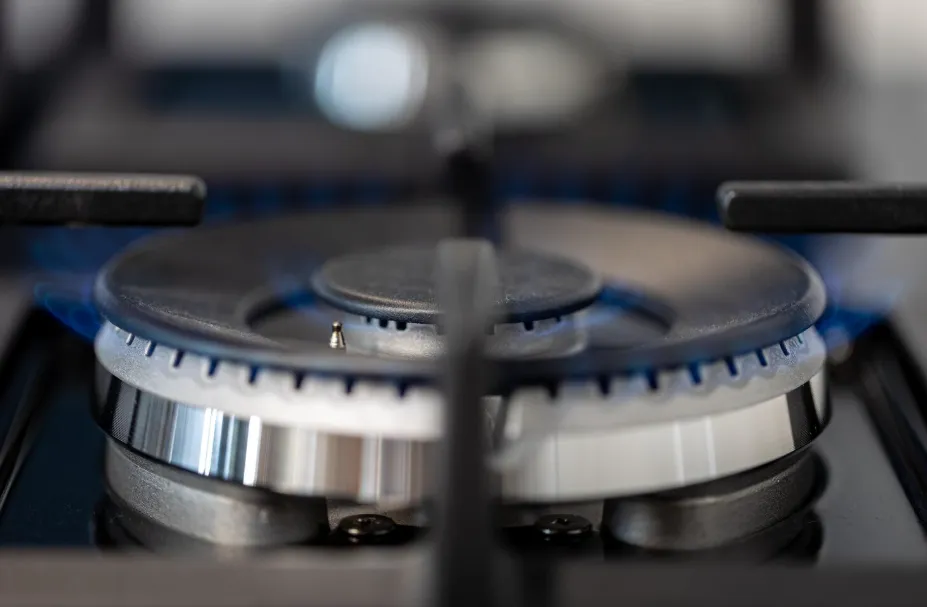
Image: pvpproduction on Freepik
If your home already has natural gas, the process is simpler, though your plumber must confirm your meter can handle the additional load. A meter upgrade may be needed if you use multiple high-demand appliances.
Finally, your plumber must make sure the stove is set up correctly for your specific fuel type—natural gas or LPG—to guarantee safe, efficient operation.
Before anything, ask your gas fitter if your home already has a natural gas connection. This decides how simple your switch from an electric to a gas stove will be.
This is common in inner and middle Melbourne, where Jemena and AGN networks are well established.
In suburbs like Fitzroy, Carlton, or Essendon, you typically only need a kitchen extension rather than a new street connection.
If you already use gas for heating or hot water, your fitter can run a line from existing pipes to your kitchen.
Here is what your gasfitter will do:
Expect the job to take half a day to a full day, depending on pipe accessibility and cabinetry requirements.
This is the reality for all-electric homes, newer builds, and outer Melbourne suburbs not yet serviced by the reticulated gas network.
With this condition, you have two main options:
Once your supply is set up, your licensed gas fitter will run the pipes, install the isolation valve, and commission the stove. At the same time, a licensed electrician must disconnect the old 240V circuit.
You can expect a 4–8 week wait for grid connections so service lines and meters can be installed. LPG is faster, typically ready in 1–2 weeks.
Once you know which scenario fits your home, here’s what to expect from booking until you light your first fire.
The process starts with a site assessment, where your gas fitter checks existing pipework, meter capacity, kitchen layout, and ventilation.
They will confirm the project scope, decide if an electrician is required (always yes), and advise if you need a new connection application.
At this stage, please ask:
Once the gas fitter confirms the site is ready, book a licensed electrician to safely remove your electric stove and manage the wiring.
Most Australian electric stoves use a dedicated high-power circuit (20A–40A), while gas stoves only need a standard 10A GPO for ignition and features.
Your electrician will:
This is the main installation phase. It typically happens the day your electrician disconnects the old stove and installs your new 10A GPO, or the day after.
Your gas fitter will run a new gas line from your meter or existing pipes to your kitchen, ending in a bayonet fitting or direct connection behind the stove.
In most Melbourne homes, they use durable copper or CSST (corrugated stainless steel) piping that meets all safety codes. They will choose the shortest path, steering clear of concrete, cabinets, and electrical wiring.
The gas fitter will:
Remember, the new gas stove must be on site, unwrapped, and positioned ready for connection before work begins.
Your gas fitter will install a gas cooktop, pressure-test the pipes, and light every burner. A healthy flame must be blue.
They will also verify overhead clearance, ensure the stove is level, and confirm it is fully operational.
Once finished, you will receive a Certificate of Compliance. Keep this with your property records for insurance, future renovations, or selling your home.
The process typically takes 30 to 90 minutes, depending on the complexity of the adjustments.
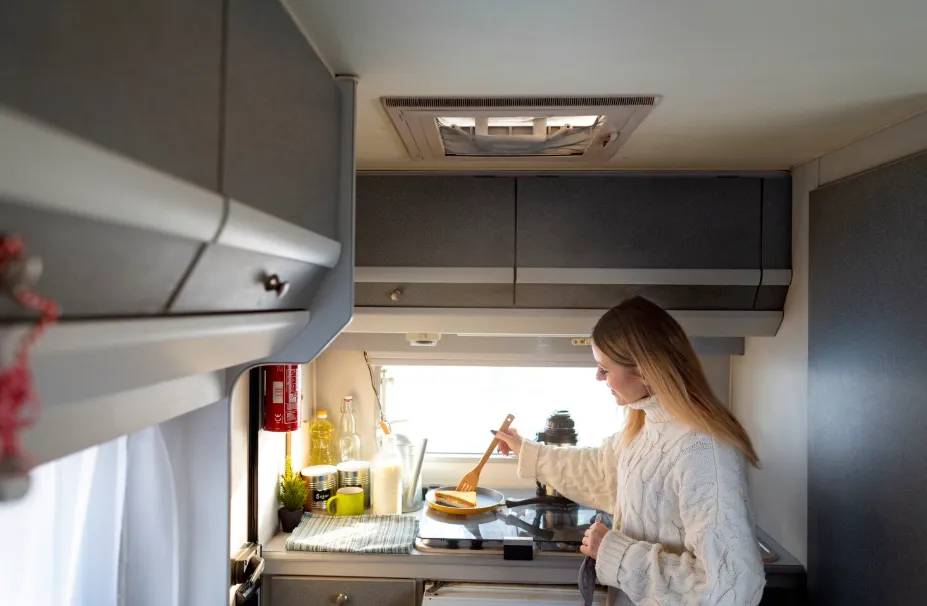
Image: freepik
Gas stoves release byproducts like carbon monoxide, nitrogen dioxide, and water vapor that electric stoves don’t. That’s why you need good ventilation.
Under AS/NZS 5601.1:2022, rangehoods are mandatory for all new Melbourne gas installations.
Key clearance requirements:
Ducted rangehoods are better. Recirculating models trap grease but leave harmful gases behind. If you use one, you must keep a window open.
Converting an electric stove to gas in Melbourne typically costs $1,400–$3,200 for homes already connected to natural gas.
For standard installations with short pipe runs (3–6 metres), expect to pay $1,800–$2,600. Difficult access, longer pipe runs, or meter upgrades can increase costs to $2,800–$3,500.
| Work Item | Approx. Cost (AUD) |
|---|---|
| Licensed electrician – disconnect electric stove & install new 10A GPO | $200 – $450 |
| Gas fitter – new gas pipe run & connection (short run) | $600 – $1,200 |
| Gas fitter – longer or difficult pipe run | $1,200 – $2,000+ |
| Gas stove connection, testing, adjustments & Certificate of Compliance | $300 – $600 |
| Gas fitter site assessment | $0 – $150 (often free) |
| New gas mains connection (if no gas at property) – AGN | ~$2,157 (ex GST) |
| New gas mains connection (if no gas at property) – Multinet | ~$2,660 (ex GST) |
Melbourne Gas Plumber gives you a clear price upfront with no hidden fees, so you’ll know exactly what you’ll pay before the work starts. Get in touch for a free assessment.
No, it’s illegal. Under the Gas Safety Act 1997 and Electricity Safety Act 1998, all gas and electrical work must be performed by licensed professionals to meet AS/NZS 5601.1:2022 standards.
Homeowners are not excluded. And the reasons are:
Regardless of your DIY skills, these rules exist to protect you. You must hire a licensed professional for any electric-to-gas conversion.
Here are the questions homeowners ask most when switching from an electric to a gas stove:
No, you don’t need a building permit to switch from an electric to a gas stove. But, your licensed gas fitter must issue a Certificate of Compliance (CoC), proving the installation meets AS/NZS 5601.1 standards.
Your licensed electrician will disconnect the 240V connection, isolate the wiring at the switchboard, and cap the cable ends. They will install a 10A GPO for the gas stove’s ignition and label the old circuit “unused.”
If natural gas is unavailable, you can use LPG when converting from electric to a gas stove. Your fitter will install a conversion kit, regulator, and external piping. But remember, always store LPG cylinders outdoors.
Generally no, as long as you hire licensed professionals and receive a Certificate of Compliance. You can notify your insurer of utility changes to satisfy your “Duty of Disclosure”. Without it, they may reject claims.
You can convert an electric stove to gas in four steps: get a site assessment, downgrade your power outlet, install a gas line, and test the stove. If you already have a natural gas connection, the process is even simpler.
But keep in mind that doing this work yourself is illegal in Victoria under gas and electrical safety legislation.
Ready to make the switch safely? Get in touch with Melbourne Gas Plumber. With decades of experience, we provide licensed gas fitting, electrical coordination, transparent pricing, and a Certificate of Compliance.

Every week, we share practical insights based on the combined knowledge and real-world experience of our team. Our articles cover gas fitting, gas safety, appliance installation, hot water systems, maintenance and everyday plumbing issues, so you can make well-informed decisions about your gas plumbing needs.


Fill the form below and we’ll get back ASAP!

MGP! Thank you for help, honest pricing and high quality work. Thank you to Joe for pricing and the boys involved for replacing my hot water tank and fixing my gas leak for a reasonable price. 5 star response, 5 star service and 5 star price.
Joe was great. Very professional and quick. Gas hot water heater needed replacing, he was honest and upfront about what our options were. System was sourced and replaced within a couple of hours.
Fantastic service very responsive Joe is highly recommended and works very clean and neat..... good job well done....very happy... will use again and again

At Melbourne Gas Plumber, we're here to handle all your gas plumbing needs throughout Melbourne. With over 40 years of experience, we bring extensive local knowledge and expertise to every job.
QUICK LINKS
OPENING HOURS
Open 24/7