When choosing a furnace, are you just going for the cheapest? Affordability matters, but choosing the right gas furnace type is more important. Spending a bit more upfront could save you money on utilities later.
In this guide, we’ll walk you through the different gas‑furnace options and show you how to pick the best one for your needs before calling a professional for a new gas installation. Let’s get into it.
Before you compare types of furnace, it’s good to know what matters when it comes to heating your home:
Melbourne winters range from 0 to 15°C, making adjustable heating important. Sydney’s milder winter, between 8 and 18°C. This often reduces the need for a powerful system.
Coastal areas face salt air corrosion, which can shorten furnace life. And in Brisbane, basic heating usually meets infrequent needs. In short, start with your local climate and environment.
The size of your home affects how much heating you need. A small, one-story house is easier to heat, but a big five-bedroom or multi-story place is tougher.
Larger homes often have cold spots. Those rooms that stay cold. So, you might need more advanced systems that gently move the air to keep every part of your house cosy.
Ductwork, gas supply, and venting influence your choice of gas furnace type.
If your home already has ducts in the roof or under the floor, replacing the unit is simple for a tradie. On the flip side, installing new ductwork can cost thousands and may affect which furnace type works best for you.
Now we’re talking about the upfront cost. Gas furnace prices vary. A single-stage costs between 3,000 and 4,000 to 6,000. That initial difference can seem steep, right?
But, what seems cheaper at first might end up costing you more later if you don’t pick the right gas furnace type. When choosing a furnace, you’re not just making a one-time purchase, you’re investing for 15 to 20 years.
Upfront costs are important, but efficiency matters. How well your furnace turns gas into heat decides whether you’re cozy or frustrated this winter.
A 3-star single-stage unit costs less upfront but uses more gas over time than a 6-star modulating system. Upgrading can reduce gas use by 20% to 30% annually, saving money over 15 years.
It’s not just about temperature that makes you comfortable. You also need to think about the noise level. Those are things to think about when choosing a gas furnace type.
Basic single-stage furnaces are like a light switch. They’re either all the way on or off. And if you work from home or have kids sleeping, the noise from a single-speed blower running full blast can be distracting.
Another thing to think about when choosing a gas furnace is the zoning feature. It lets you heat only the rooms you are using. If you set it up right, it can save you around 30% on your winter energy bills.
Modern systems offer Wi-Fi, so you can turn on the heat remotely before leaving the office. And smart thermostats can learn your schedule and adjust the temperature automatically while you sleep.
For some Australian homeowners, brand reputation is a key filter. That’s why they often stick with trusted brands like Brivis, Braemar, Bonaire, or Rinnai.
But, reputation alone doesn’t guarantee a good furnace. You need to check out the warranty, especially for the heat exchanger, since it’s the priciest part to replace.
And make sure your installer is a licensed gas fitter. That way, you’ll avoid problems later, like a furnace that smells like gas
To choose the right type of gas furnace, you need to look at three main parts: the burner, the blower, and the gas type.
Single-stage gas furnaces work like a light switch. When your thermostat calls for heat, the furnace turns on at full power until the room reaches the set temperature.
The gas valve opens fully, quickly heating the heat exchanger. The blower runs at full speed, pushing air through the ducts. When the room reaches the set temperature, the furnace turns off.
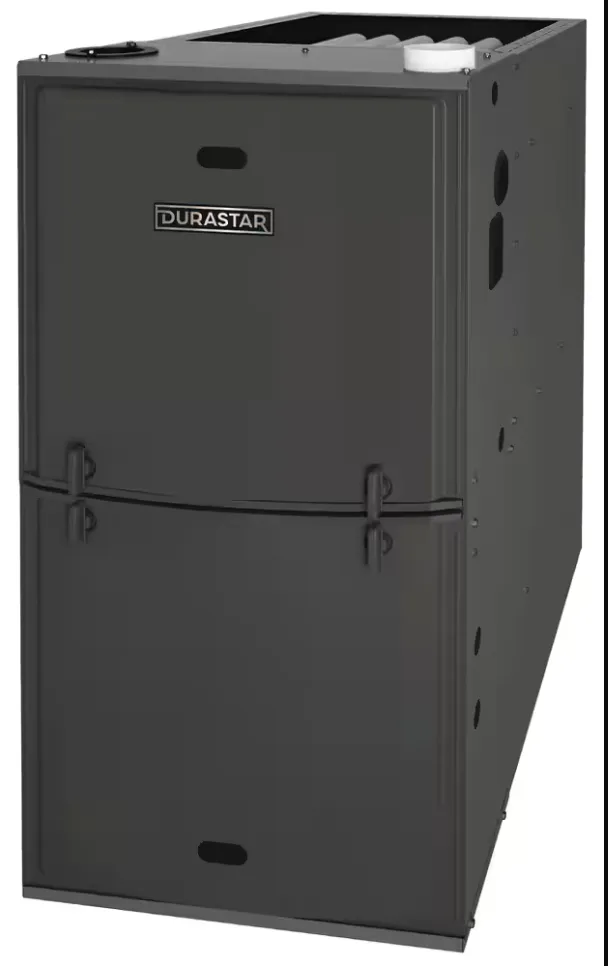
Image: Durastar.com
Pros:
Cons:
Two-stage furnaces have two gas settings: about 65% for low and 100% for high. It mostly runs on low and switches to high only when very cold.
Low-stage provides gentler, more even heat without the hot blast of single-stage systems. It runs longer at lower power, distributing warmth more evenly.
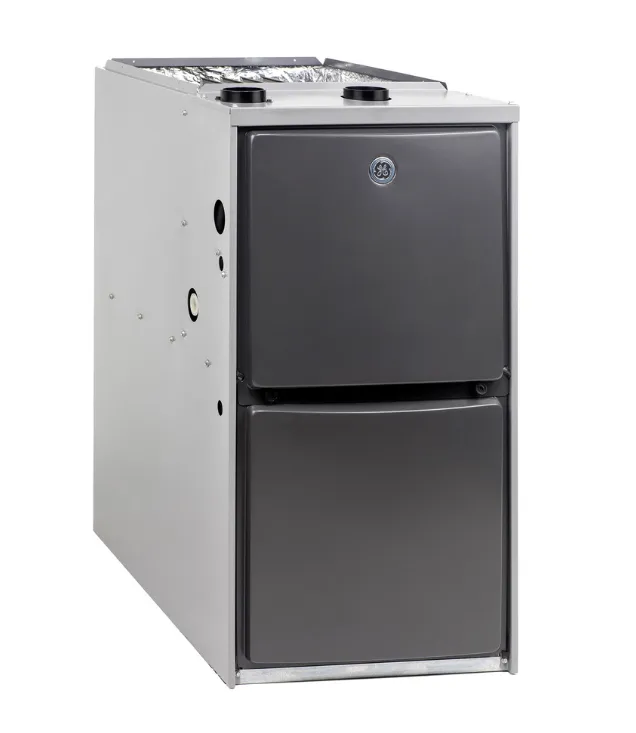
Image: geappliancesairandwater.com
Pros:
Cons:
Modulating furnaces make heating way more precise. Instead of just two settings, they can run anywhere from 40% to 100% capacity, adjusting in 1% steps.
Your furnace watches your home’s temperature and changes how much it works to keep it just right. On warm mornings, it might run at 45%, but on very cold nights, it goes all the way to 100% without any problem.
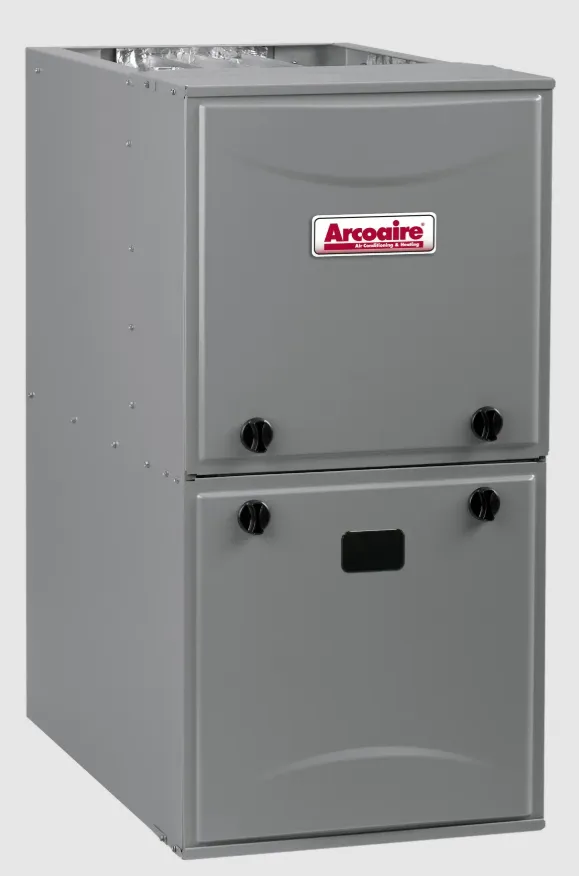
Image: Arcoaire.com
Pros:
Cons:
A single-speed blower is the simplest fan you’ll find in cheap gas furnaces. It works on a basic idea: when the burner turns on, the blower runs at full speed, and it stays that way until the heating cycle is over.
When your thermostat calls for heat and the burner starts, the blower kicks to full speed instantly, pushing warm air through your ducts with a loud “whoosh.” When the burner turns off, the blower stops immediately.
Pros:
Cons:
A multi-speed blower furnace has a few fixed fan speeds. Unlike variable-speed systems, it doesn’t change speeds automatically; your installer sets the speed once during installation.
If it’s set to Medium, it stays there; if High, it stays high. The good thing is, they can adjust it just right for your home before finishing, instead of a single speed blower that might not fit.
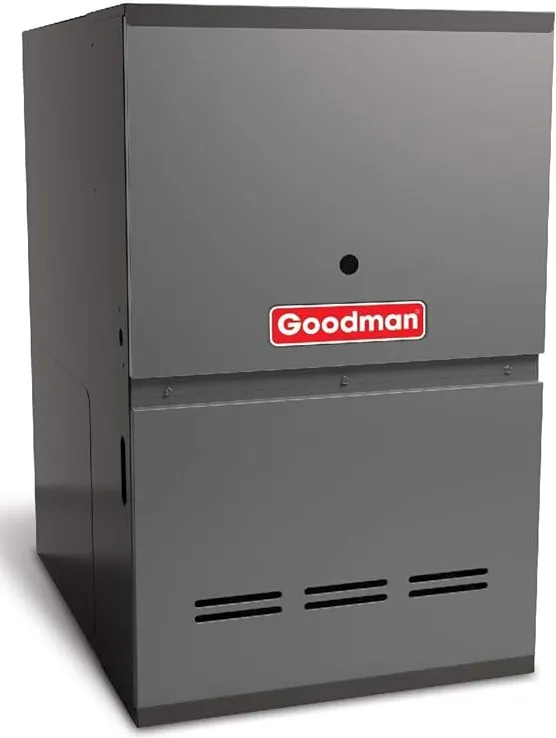
Image: amazon.com
Pros:
Cons:
This type of gas furnace has a variable-speed blower with a high-efficiency DC motor, called an ECM, that can smoothly and constantly change the fan speed.
When you turn on the heat, the variable-speed furnace slowly ramps up the fan. This avoids the sudden “cold draft” you get with single- or multi-speed blowers before the heat exchanger warms up.
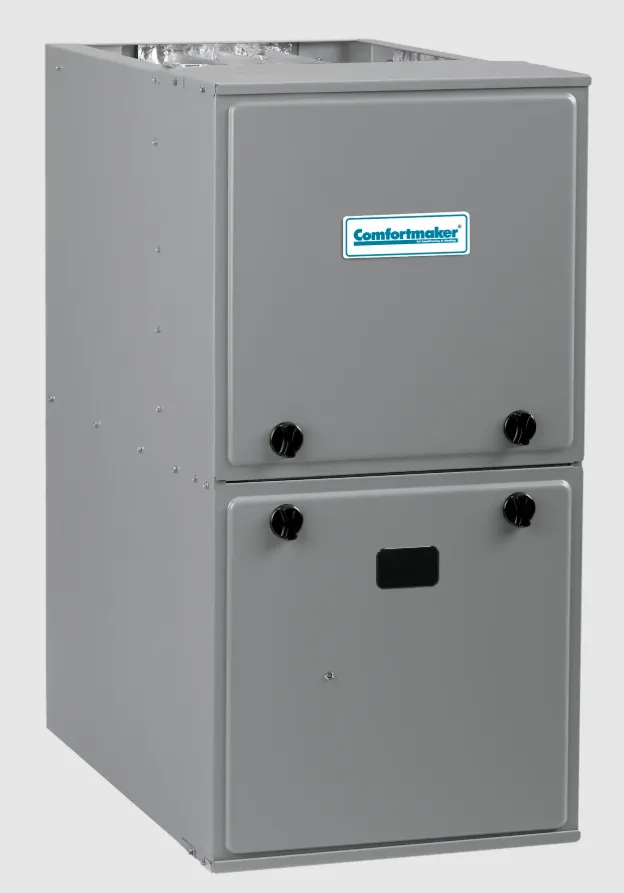
Image: comfortmaker.com
Pros:
Cons:
Here’s how to match these gas furnace types to your situation:
Here are some of the common gas furnace questions most homeowners ask:
The most common modern setup is a two-stage burner with a multi-speed blower. It gives you a good balance of a 4 or 5-star energy rating without the high cost of a premium modulating gas furnace.
Most Australian homes use natural gas heaters. Older houses usually have single-stage burners, but newer ones and renovations are moving toward two-stage and modulating gas furnaces to save energy.
“HVAC” means Heating, Ventilation, and Air Conditioning. A gas furnace, or ducted heater, is the “H” part. You can often add refrigerated cooling to make it a full HVAC system.
Whether you want a budget-friendly single-stage basic or an ultra-efficient modulating premium, the best gas furnace for you depends on your location, budget and how long you’ll stay in your home.
Remember, a gas furnace is a 15–20 year investment, so your choice now will affect your comfort for years.
And if you’re unsure and need a professional assessment, call us at Melbourne Gas Plumber. We’ll help you explore your options and choose the right gas furnace.

Every week, we share practical insights based on the combined knowledge and real-world experience of our team. Our articles cover gas fitting, gas safety, appliance installation, hot water systems, maintenance and everyday plumbing issues, so you can make well-informed decisions about your gas plumbing needs.


Fill the form below and we’ll get back ASAP!

MGP! Thank you for help, honest pricing and high quality work. Thank you to Joe for pricing and the boys involved for replacing my hot water tank and fixing my gas leak for a reasonable price. 5 star response, 5 star service and 5 star price.
Joe was great. Very professional and quick. Gas hot water heater needed replacing, he was honest and upfront about what our options were. System was sourced and replaced within a couple of hours.
Fantastic service very responsive Joe is highly recommended and works very clean and neat..... good job well done....very happy... will use again and again

At Melbourne Gas Plumber, we're here to handle all your gas plumbing needs throughout Melbourne. With over 40 years of experience, we bring extensive local knowledge and expertise to every job.
QUICK LINKS
OPENING HOURS
Open 24/7